Project Ideas for Cotton Worsted Weight Yarn

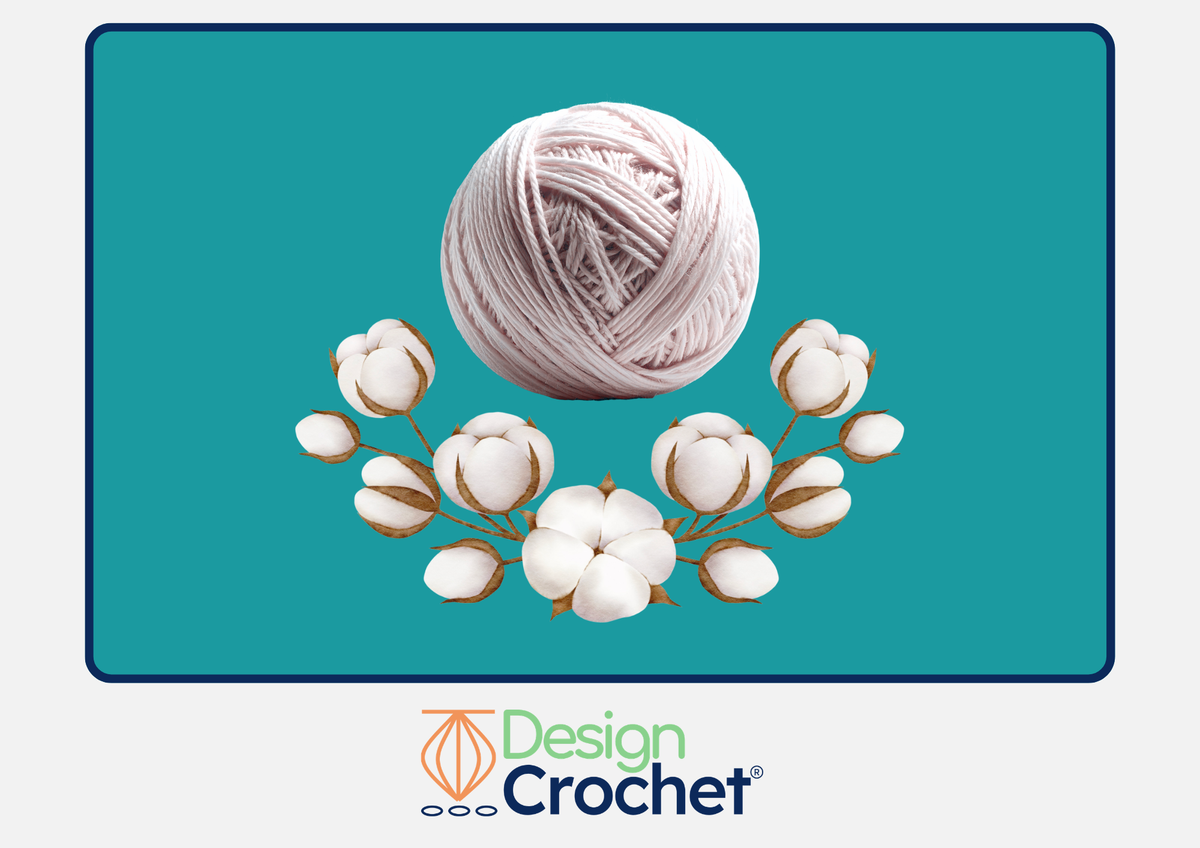
If you’ve ever stared at a skein of cotton worsted yarn and wondered what it wants to become, start with the yarn itself. Let its weight, fiber, and color guide your stitch and project choices. This “yarn-first” approach is one of the fastest ways to pick a project that actually works.
For texture-focused crochet, look for a yarn profile like this:
- Fiber: cotton or smooth cotton blend
- Weight: worsted
- Color style: solid or low-contrast tonal
- Hook range: around I/9 (adjust for your gauge)
This combination gives clean stitch definition and lets structured stitches, like Cluster Rings, show off every detail. Fuzzy or highly variegated yarns can blur the texture, so smooth cotton is your friend when clarity matters.
Why this works:
- Cotton keeps stitch edges crisp so structure is easy to read
- Worsted weight adds body, giving texture enough presence
- Solid colors focus attention on stitch architecture instead of busy color changes
Pair that yarn with a stitch: Cluster Rings Stitch
A strong stitch match for cotton worsted is Cluster Rings Stitch.
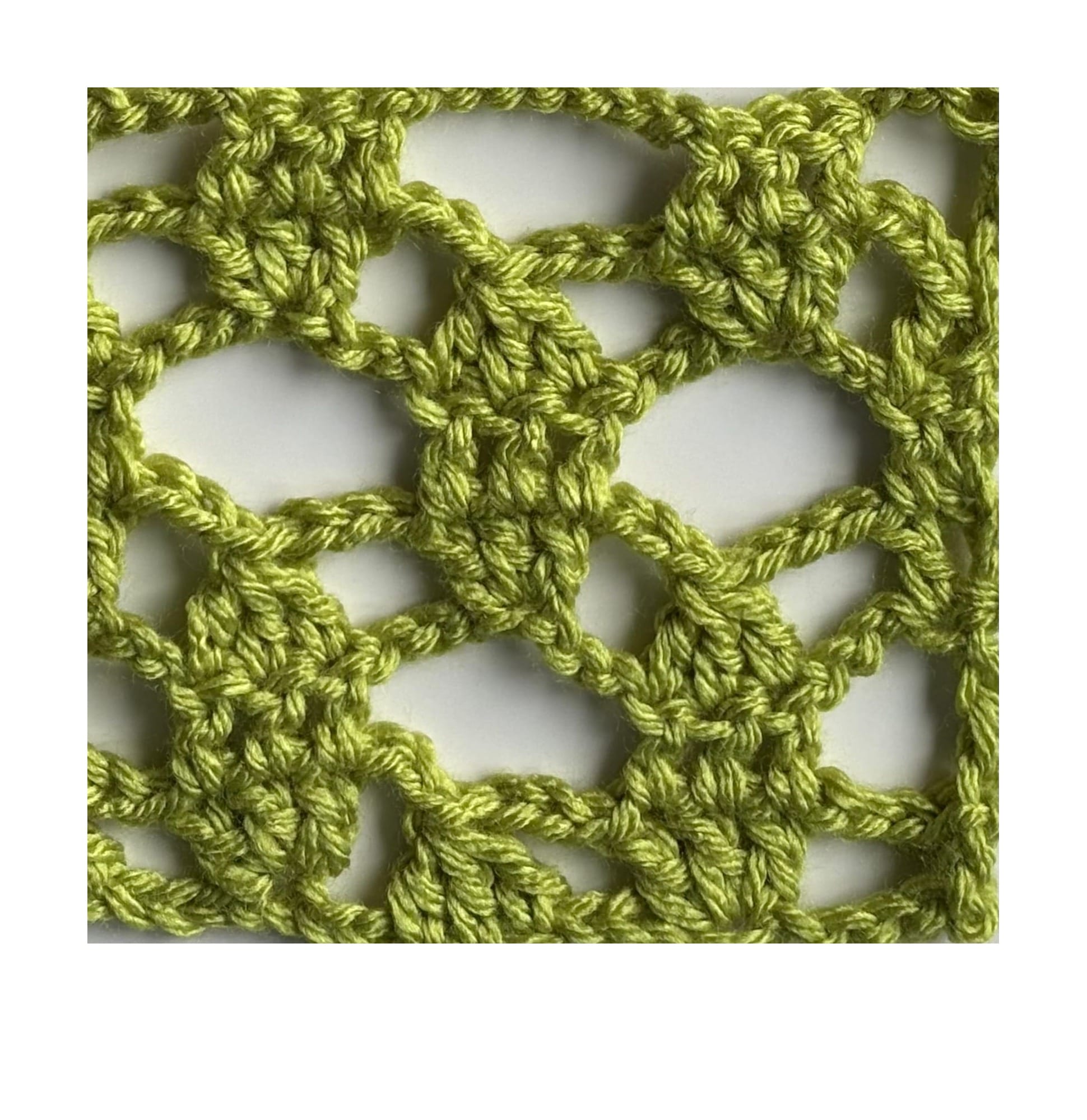
Why this stitch fits:
- Creates lacy diamond-like openings
- Forms clear grouped stitch moments
- Shows texture without relying on complicated colorwork
This is where yarn-first planning pays off: the yarn supports the structure of the stitch, letting the texture shine.
Choose the project that fits both yarn and stitch
With this pairing, a market bag or basket is a natural choice.
Why it fits the yarn:
- Cotton is durable and practical for everyday use
- Worsted weight holds shape without being stiff
- Breathable fiber works well for openwork utility pieces
Why it fits the stitch:
- Cluster Rings texture is visible at scale
- Lacy openings make sense for a bag
- Repeated motifs create a strong surface quickly
High-level construction: how to build the bag

Keep it simple:
- Start with a flat circle base of single crochet stitches worked in the round. This will create a bottom with strong structural integrity.
- Increase until the base reaches the desired diameter (about 5-9 inches)
- Stop increasing and work straight up to form the cylinder for the bady of the bag. Make sure that your stitch count is a multiple of the cluster rings pattern (or close to it).
Add two reinforce straps at the top edge for handles. Make sure the handles are equal length and long enough to hold over the shoulder.
Technique spotlight: Joined at Top (JAT)

A structural concept used in the cluster rings stitch is Joined at Top (JAT).
What it means: multiple stitch bases are finished into one shared top, for example, in decreases or "together" stitches.
Why it matters:
- Makes grouped stitches easier to read
- Shows when a stitch looks like a decrease but functions as structure
- Helps compare, teach, and edit patterns faster
In Design Crochet notation, you can represent this clearly with grouped bases plus the JAT label (e.g., (dc.3)jat). With cotton worsted, the top join stays crisp and visible.
Quick yarn-first checklist
Before committing to a full project, ask:
- Does this fiber show stitch detail or blur it?
- Does this yarn weight support the texture scale you want?
- Does this color style help or hide the stitch architecture?
- Is the chosen stitch structurally aligned with this yarn?
- Is the project type a practical match for both yarn and stitch?
Mostly yes? You’re ready to build.
Optional alternative projects
Quick textured cowl:
- Wearable preview of yarn + stitch
- Solid or tonal color to let texture pop
- Repeats show lacy rhythm clearly
Decorative accessory panel:
- Great for bags, home accessories, or sample swatches
- Lets you test yarn and stitch without a big commitment
Final takeaway
When you start with a crisp, well-defined yarn, you give yourself the freedom to choose stitches that highlight texture. A stitch like Cluster Rings works beautifully because its grouped stitch elements are distinct—each combination stands on its own. That clarity allows more complex techniques, like Joined at Top (JAT), to shine, with every detail visible.
When a stitch depends on a strong shared top, your yarn choice is critical. For JAT stitches, pairing smooth cotton worsted with Cluster Rings Stitch is a reliable combination: the structure stays visible, the texture remains crisp, and your project feels intentional from the very first stitch.