Exploring Regression Studies: How Small Variations Reveal Big Structural Lessons
In our first article, we introduced regression studies — a way to test how in-the-round crochet designs behave when stitch variations interact. If you haven’t read it yet, check it out here.
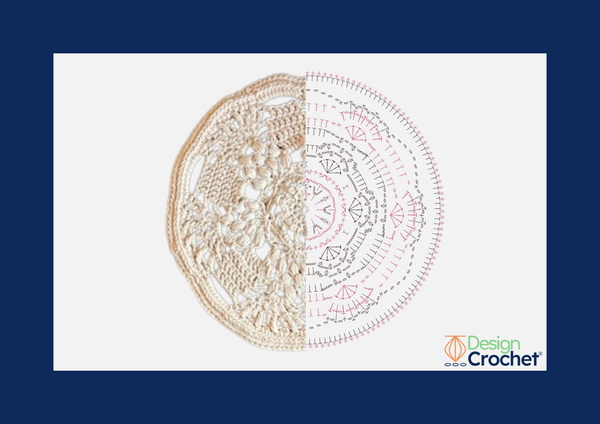
That article focused on the big picture: validating round logic across multiple charts and using a single mandala to see how tiny changes ripple through a design. In this follow-up, we zoom in on one mandala to explore the structural insights we discovered while creating and recombining variants. Think of it as a close-up tour of stitch behavior in action.
The Experiment: Building and Testing Variants
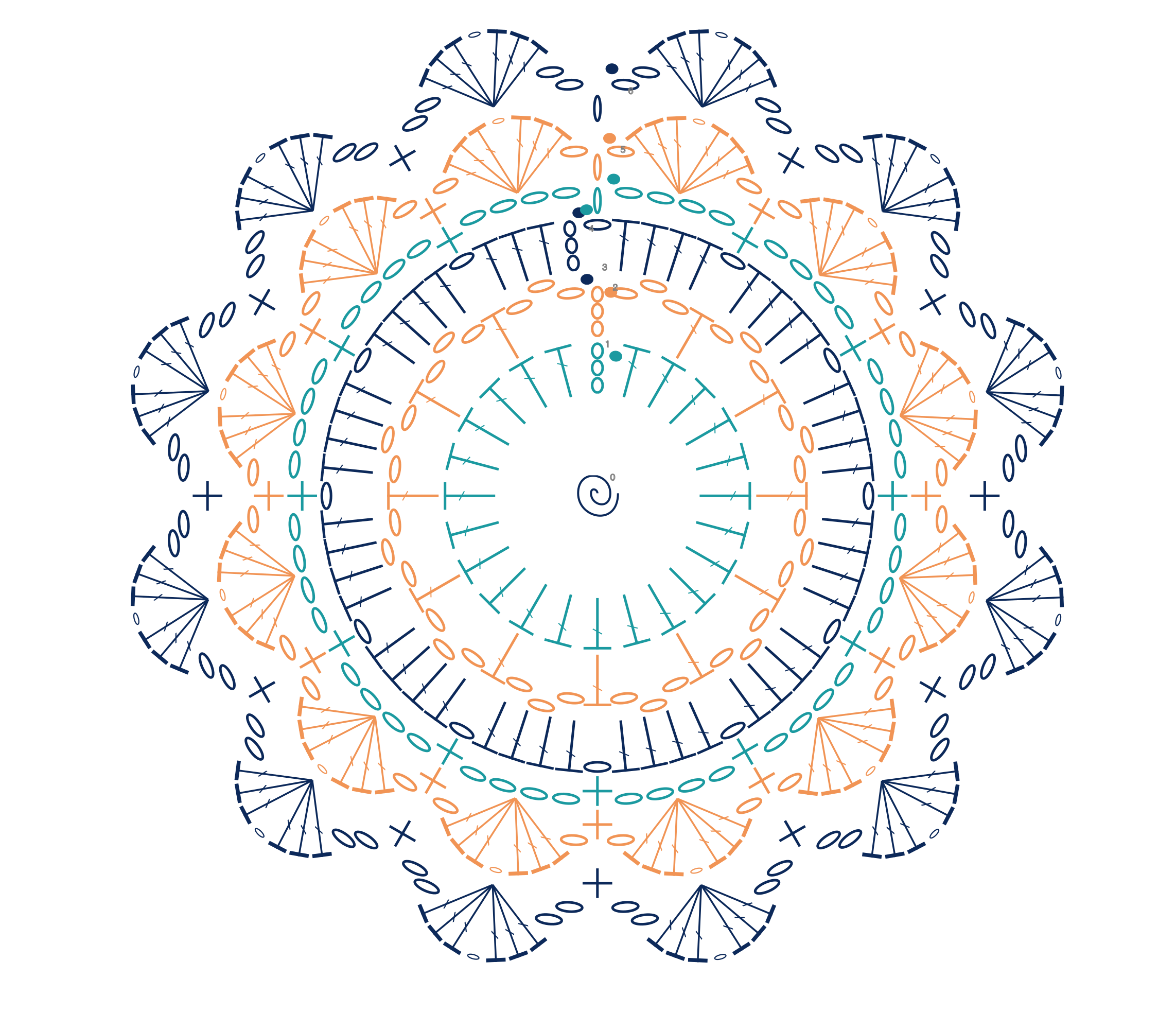
We started with a base mandala chart, then took it step by step:
- Each round was tweaked independently to create isolated variants.
- Variants stayed separate so we could spot interactions clearly.
- Finally, we layered the variants back onto the base, seeing how changes met and mingled.
The goal wasn’t a new design — it was a chance to watch stitch identity and placement evolve under small changes.
Structural continuity: the first “aha”
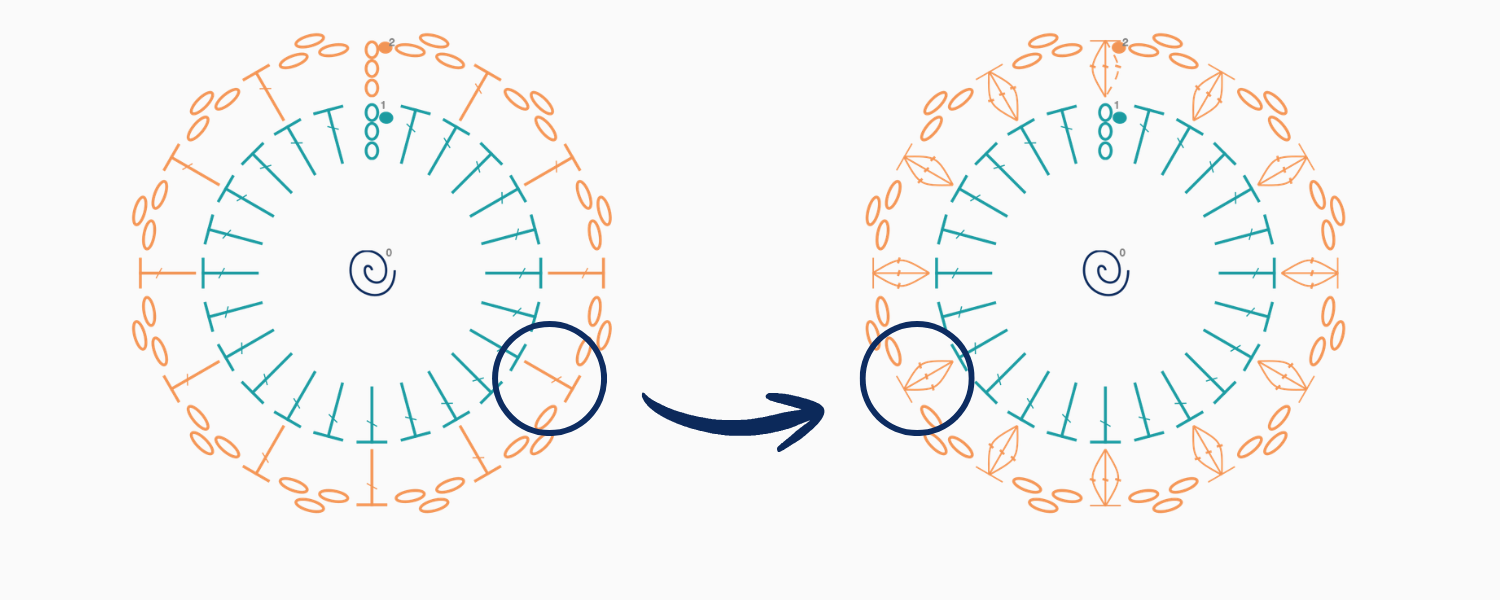
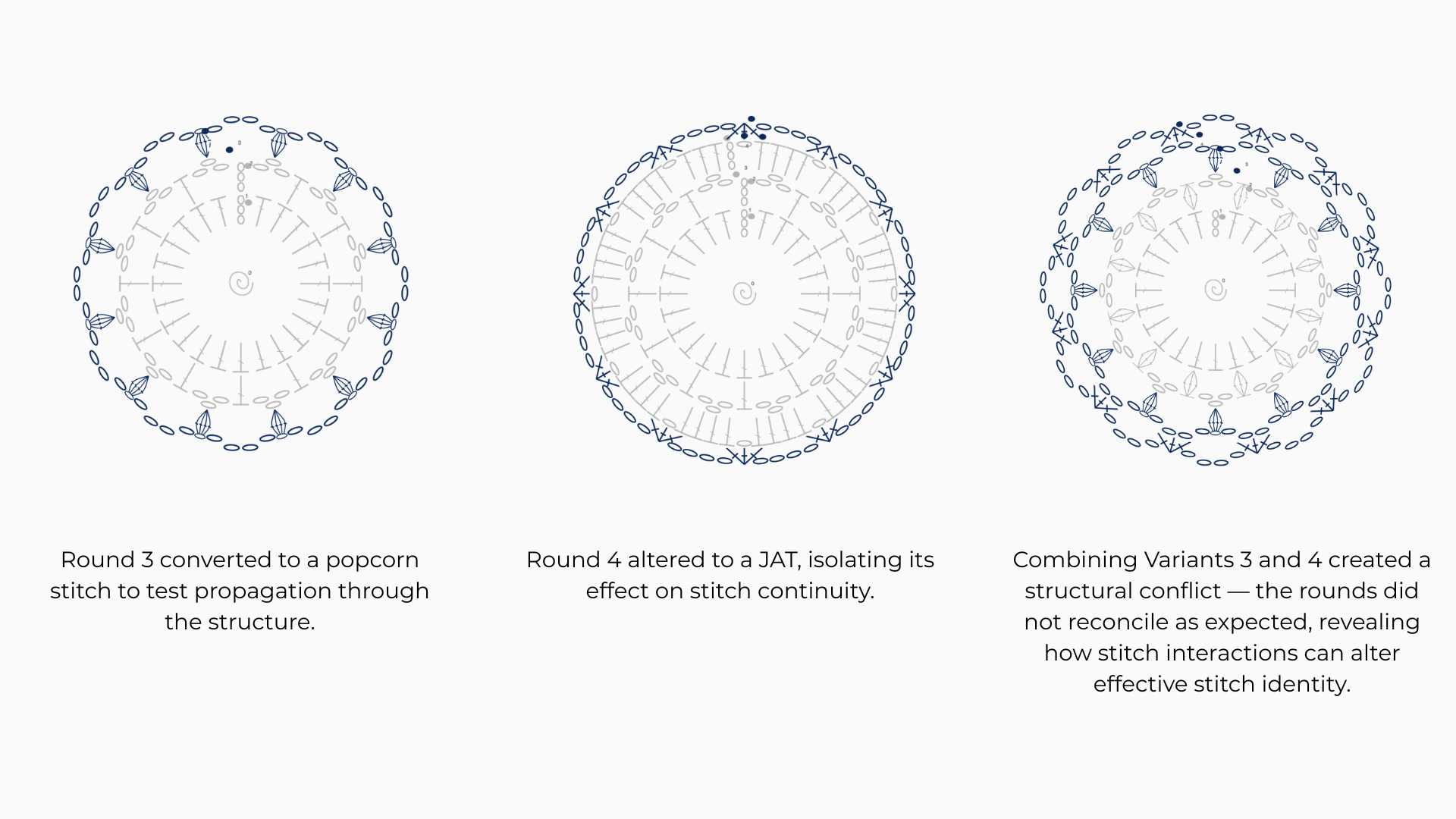
When Variants 3 and 4 collided, something interesting happened:
- Variant 3 added chain density with joined stitch tops (JAT).
- Variant 4 introduced a decrease.
- Combined, the decrease landed above a chain sequence, subtly changing the stitch’s behavior.
Alone, each variant worked perfectly. Together, the stitches revealed hidden interactions — a neat reminder that context changes everything in the round.
Notation divergence: spotting the twist
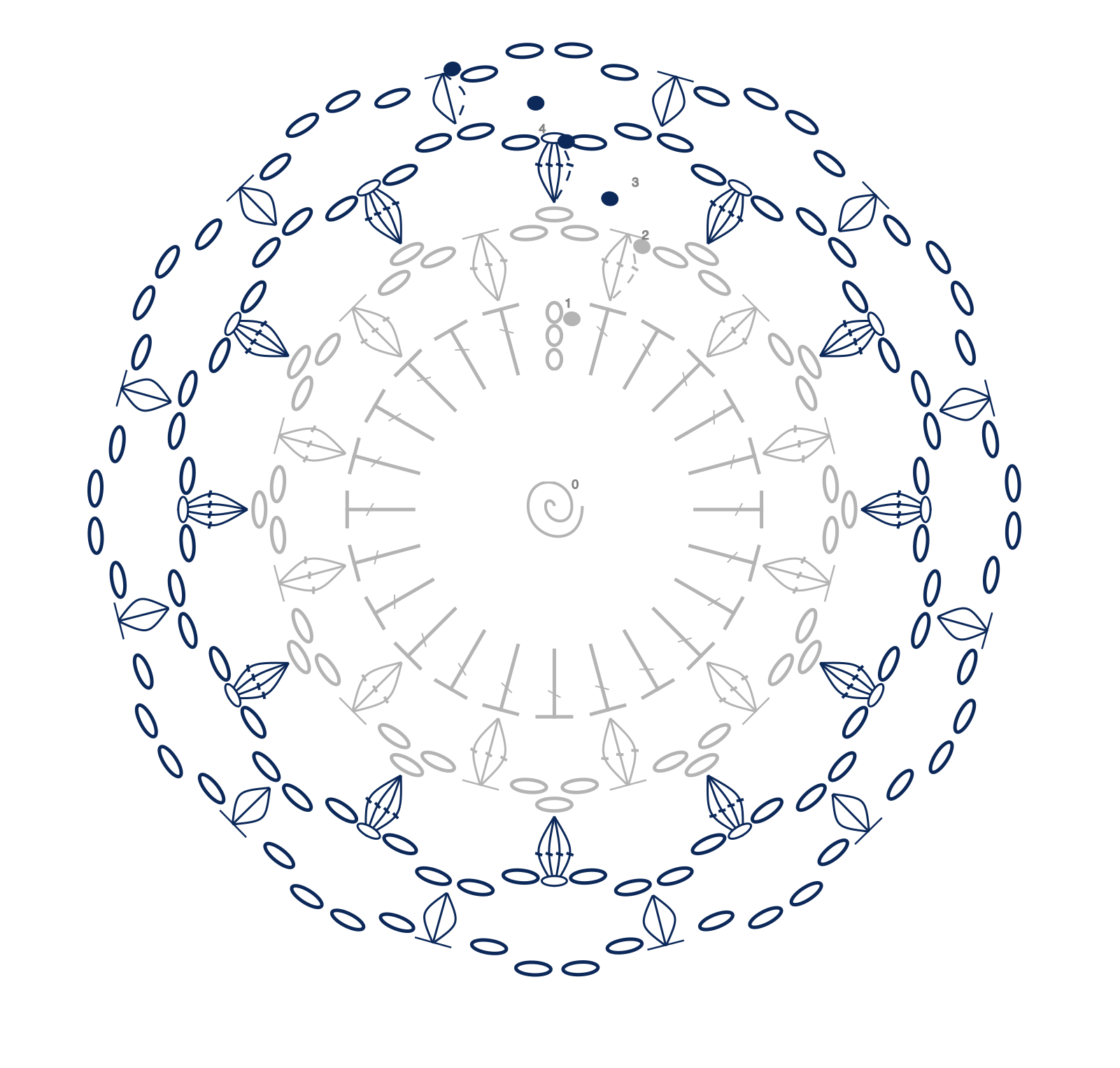
- A JAT above a chain sequence isn’t standard.
- The original chart read 3 sc jat, but the stitch behaved more like a jatab.
- Solution: notation revised to 3 puff in the combined diagram, keeping clarity and visual cohesion intact.
Unexpected behaviors: the stretch test
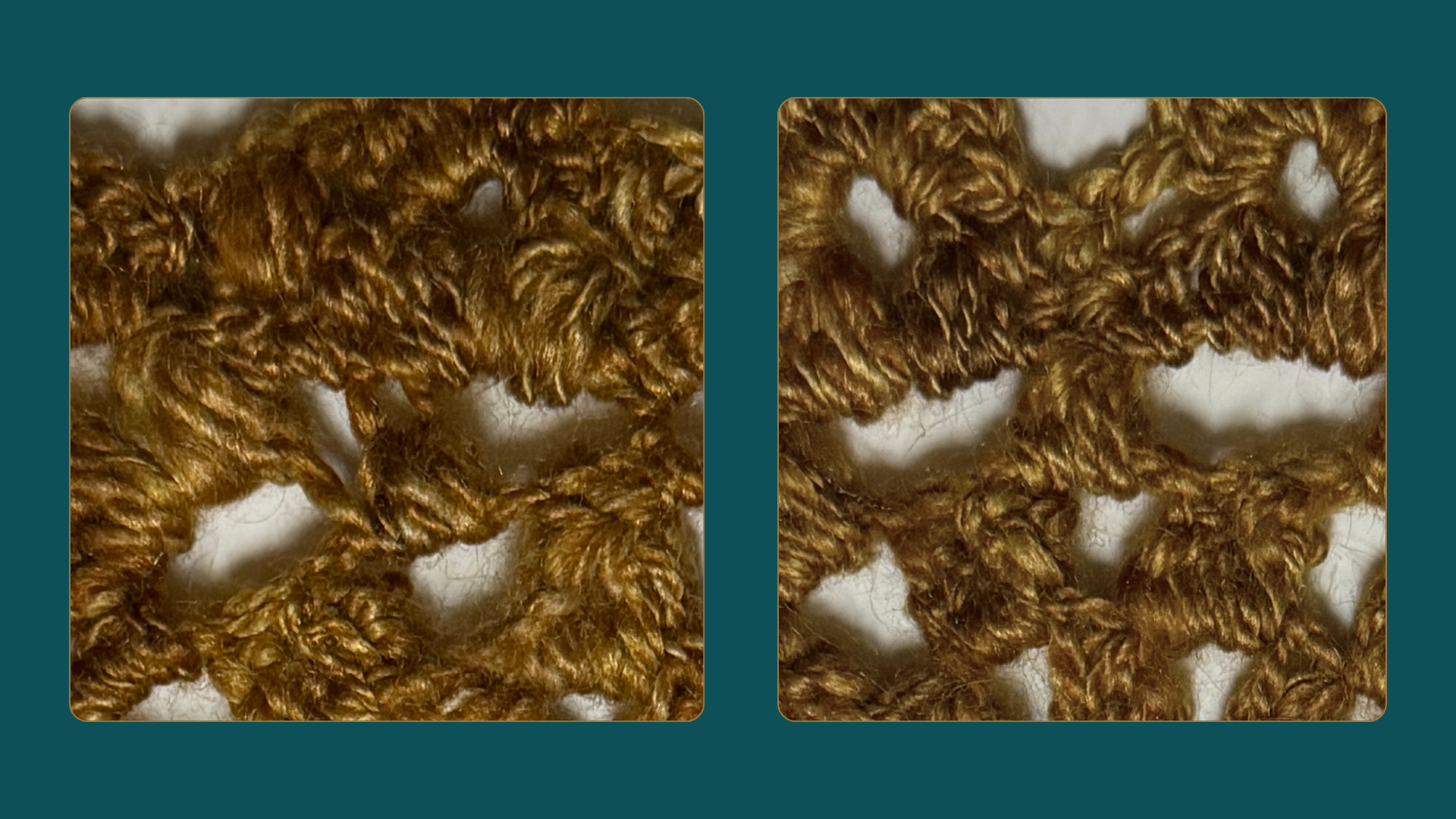
- Variant 5 introduced a 3 sc shell above a JAT, causing stretch along one post strand.
- We redistributed the shell: one stitch entered the JAT, the others moved adjacent. Shape preserved, structure balanced.
- Secondary refinement: 3 puff from Variant 6 became 3 sc jat, reinforcing continuity and producing a harmonious mandala shape.
Why this matters
Regression studies aren’t about catching mistakes — they’re about revealing constraints and possibilities:
- Stitch identity and placement can shift in subtle ways.
- Notation tweaks preserve readability without altering visual intent.
- Designers gain confidence experimenting, knowing which variations affect structure versus appearance.
Takeaway: Observe, Adjust, Master
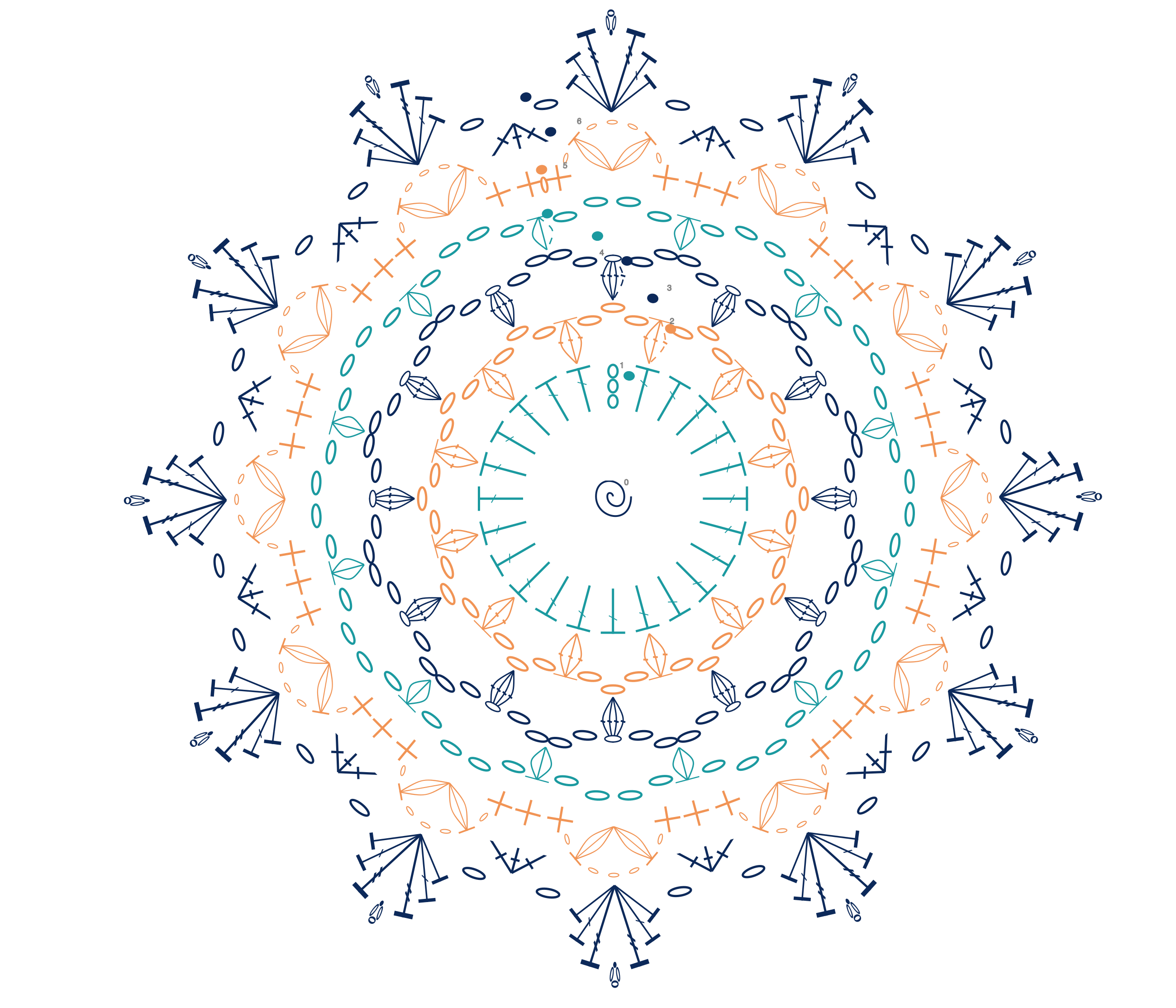
Watching these interactions in action is a powerful reminder: the small stuff matters. Every join, shell, and chain counts. Studying how variations combine builds a framework for more deliberate, elegant crochet design.
Take a base, make a few tweaks, watch closely, and let the mandala teach you. Observation becomes skill, experimentation becomes mastery.