Regression Studies: Validating Crochet in the Round

Understanding Crochet in the Round
This work is part of an ongoing effort to understand the architecture of crochet in the round — how stitch rules, placement, and notation interact to produce stable circular structures. While much of this investigation centers on charts and diagrams, it also creates space for related studies in materials, color, and pattern translation.
The first step in that work was ensuring that our in-the-round logic behaves predictably under variation.
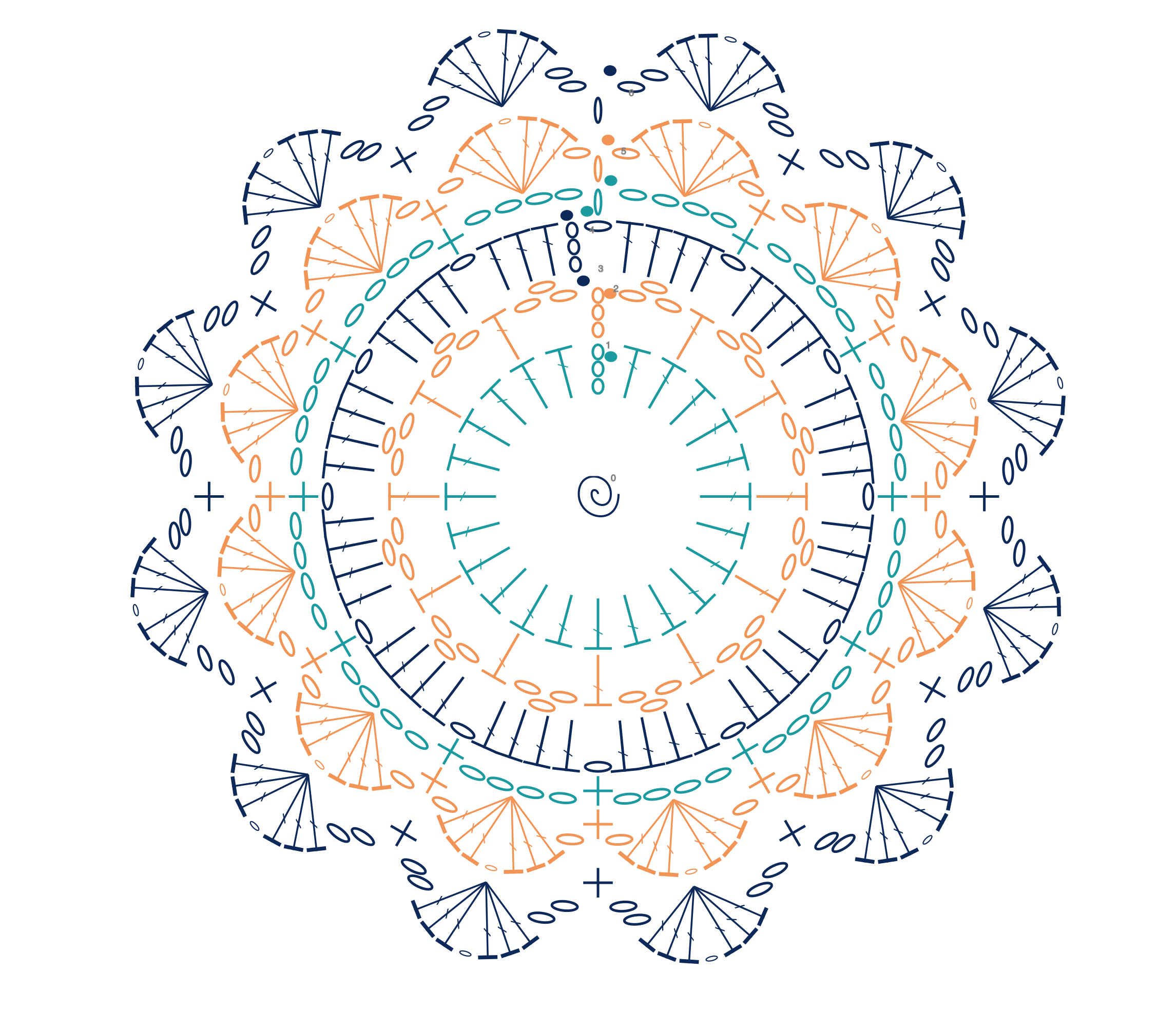
The Challenge of Interacting Stitch Rules
A core challenge in crochet design — especially when working in the round — is that every stitch decision interacts with everything around it. Placement is dependent on what comes before and after, above and below. When two stitch rules interact, they don't always behave nicely.
What makes this especially difficult is that issues aren't always obvious at the instruction level. A chart may generate cleanly and appear valid, only for a problem to emerge once the image itself is rendered. In many cases, nothing appears “wrong” until you can see the structure.
Why This Matters for Scalable Systems
This presents a clear challenge when building a system intended to scale. Early implementations may appear stable within a narrow framework, but adding new stitch sequences often reveals hidden assumptions — rules that worked only because the surrounding conditions were never varied.
Validating the Round Logic
As an initial architectural validation, we tested the round logic in two complementary ways.
- Validation Through Existing Charts
First, we validated the system against a large dataset of existing charts. Dozens of in-the-round patterns were gathered from books and public sources to ensure the logic behaved consistently across known constructions. These examples allowed us to verify baseline expectations before introducing new behavior.
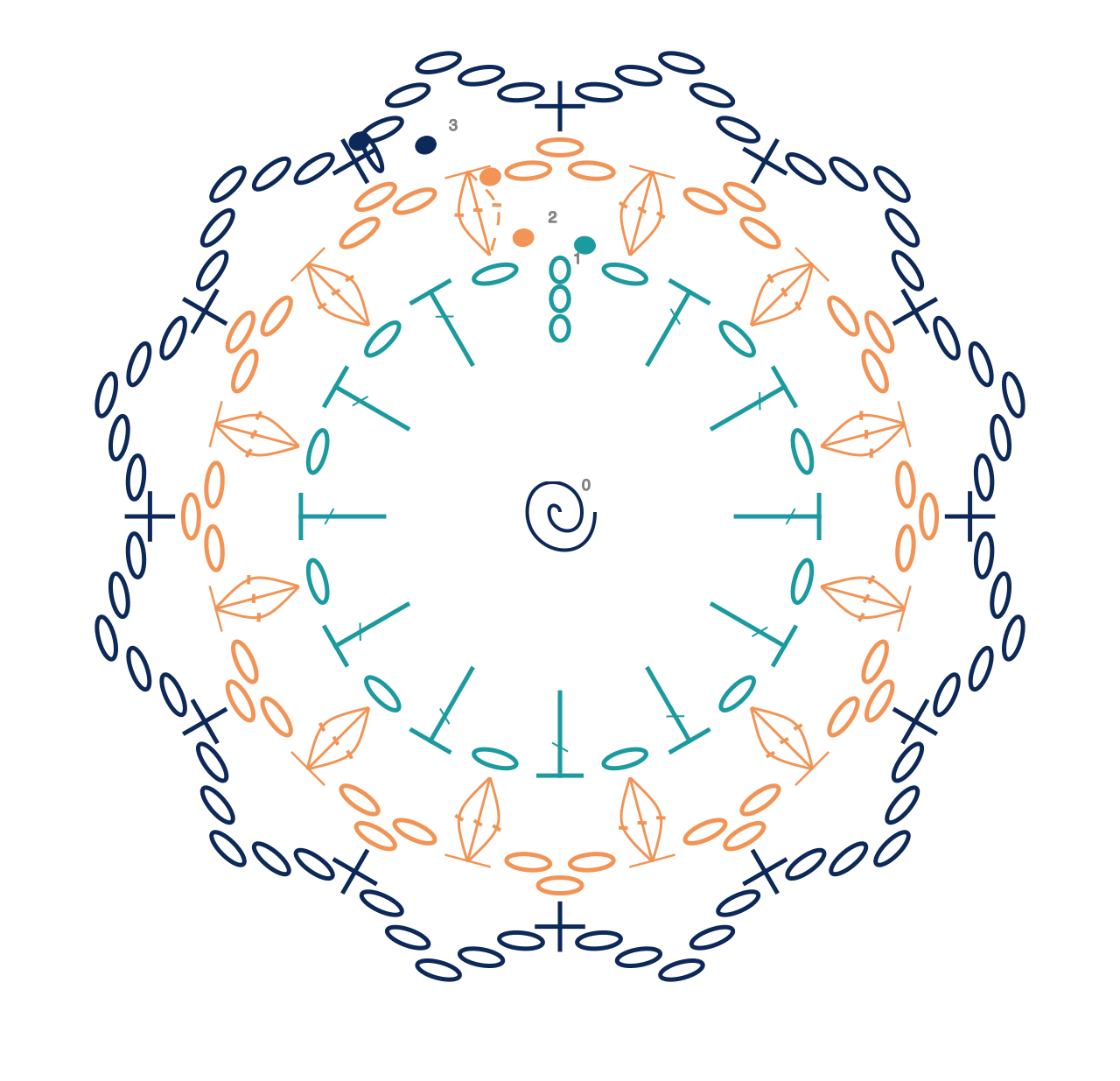
- Structural Regression Using a Single Mandala
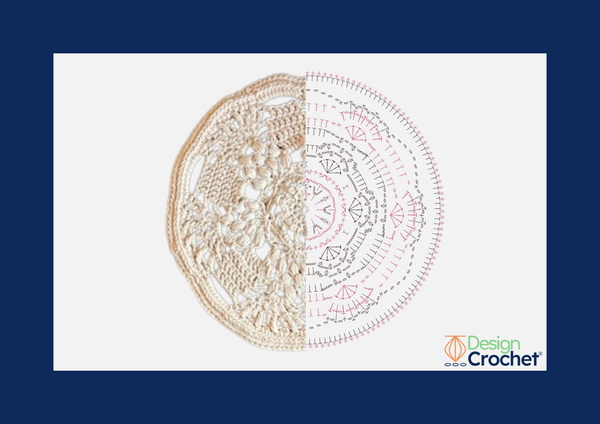
Second, we conducted a focused structural regression study using a single mandala architecture. Starting from a fixed base, we created a sequence of variants where only one round changed at a time. Each variation was isolated, then recombined into a single chart that incorporated all changes. A final refinement chart was added to resolve structural edge cases revealed by the combined design.
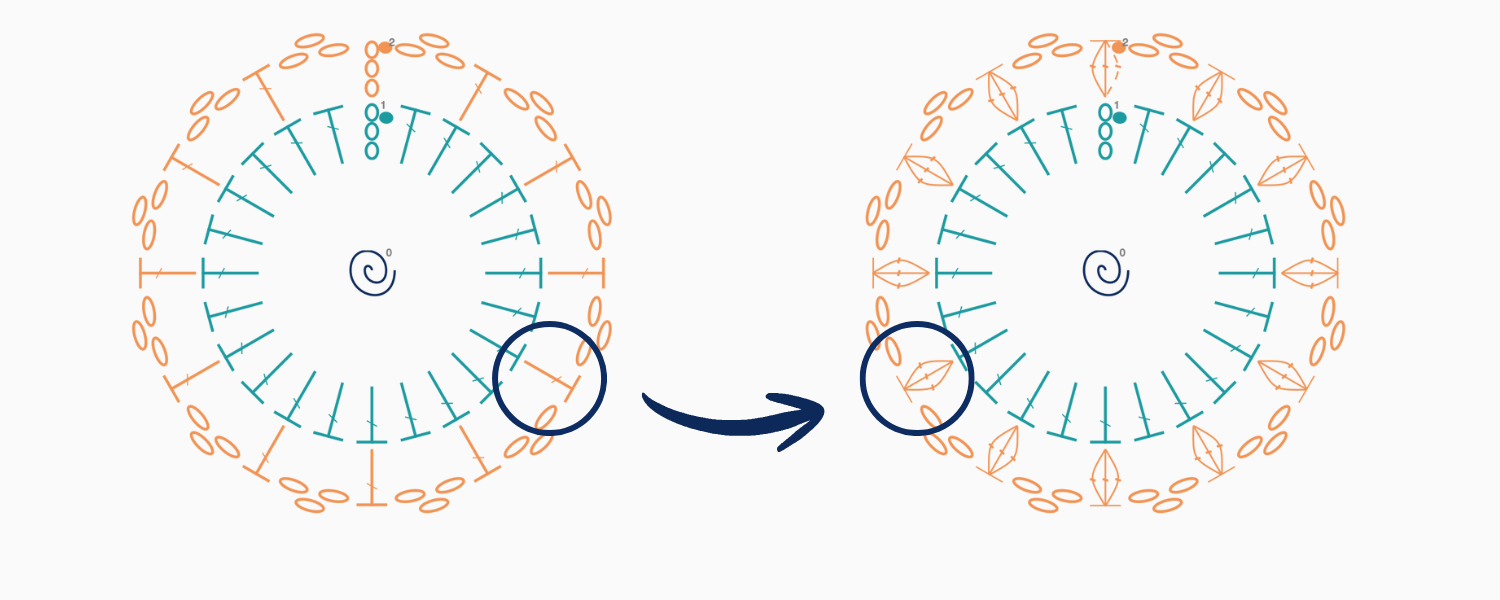
Observing How Changes Propagate
This approach allowed us to observe how localized changes propagate through an in-the-round system — not in theory, but in practice. It made visible where rules interacted cleanly, where assumptions broke down, and where notation needed to adapt to reflect actual construction behavior.
Combined Regression Results
With the completion of this regression study, we were confident in releasing the round feature. Designers can now start from a pre-built mandala or construct a new chart knowing that the underlying logic has been tested against both real-world patterns and controlled structural variation.
Laying the Groundwork for Future Studies
This regression work forms the foundation for future studies that explore circular crochet from additional perspectives — including how materials affect stitch definition, how color alters structural legibility, and how row-based patterns can be translated into round constructions — all while remaining grounded in clear, diagram-driven design.
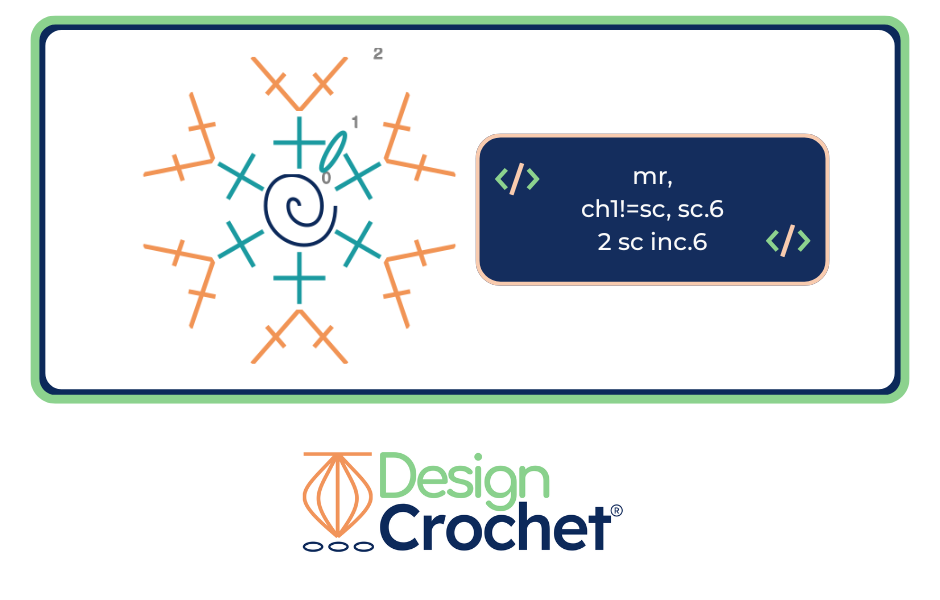
Even before the new codes go live in the Community Stitch Dictionary, you can play with the code in the featured image and start designing your own mandalas.