Ultimate Guide to Yarn Choices
Choosing The Right Weight and Type of Yarn
The world of fiber is vast and it can be overwhelming trying to decide what to choose for your next crochet pattern. In this post we will share some basic information about yarn fibers and how to become more familiar with them. Knowing what the yarn can do and how it will respond to stitching, washing, and wear will help you understand the choices a little better.
Know Your Yarn Weights
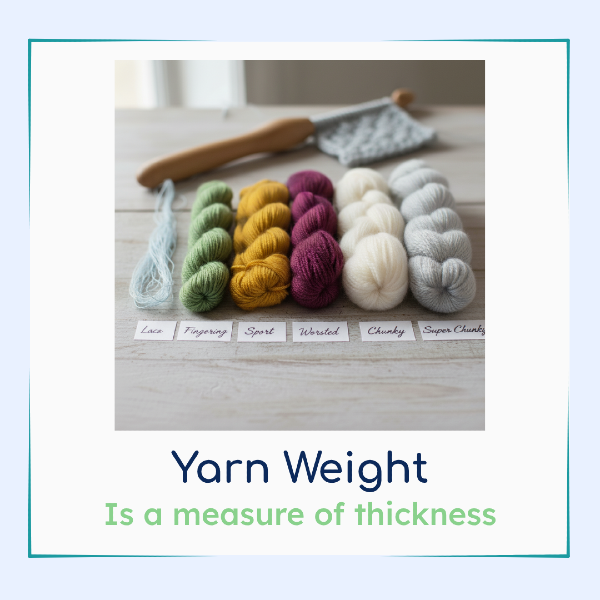
Yarn weights are important to understand because they greatly influence your finished crochet project. Here is a basic breakdown of the yarn weights.
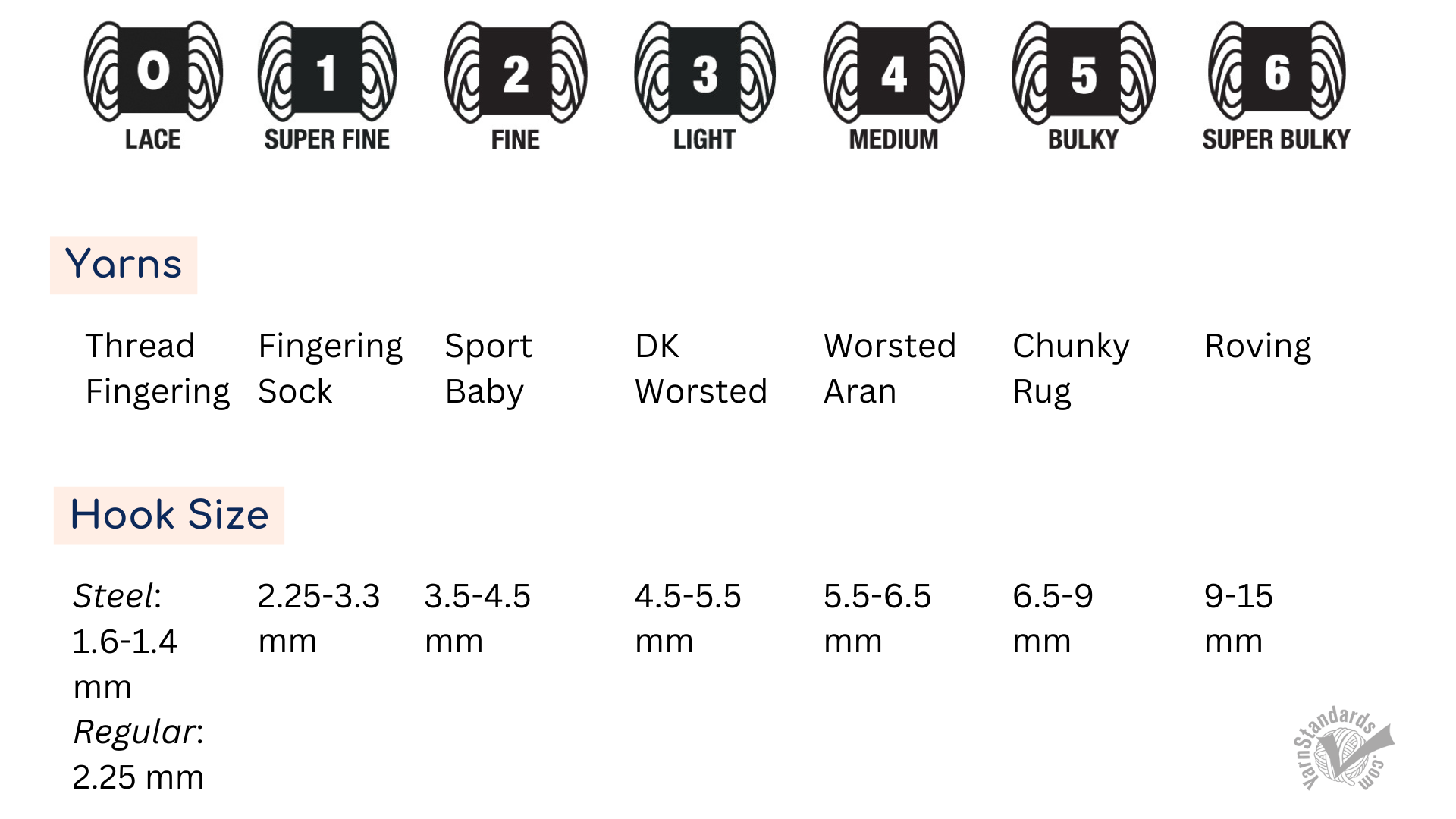
- 0 - Lace: Thread. Used for doilies and delicate projects.
- 1 - Super Fine: Fingering and sock weight. Used for baby items, socks, shawls, and wraps.
- 2 - Fine: Sport and Baby yarn. Used for baby items and lightweight throws or garments.
- 3 - Light: DK and Light Worsted. Used for lightweight garments and blankets.
- 4 - Medium: Worsted and Aran. Used for almost anything. This is the most commonly used yarn weight.
- 5 - Bulky/Chunky: Rug yarn, Craft. Used to make home decor and bulky winter items.
- 6 - Super Bulky: Roving. Used for anything heavy like home decor and winter items.
- 7 - Jumbo: Extra bulky roving, Ultra yarn. Used for heavy blankets and finger crochet.
Know Your Yarn Content
Yarn is made from a variety of sources. Understanding yarn content will help you choose the right fiber for your project. Experimenting with different types of yarn will help you become familiar with the feel, the drape, and the care needed for each type.
Natural Fibers
These are made from animals or plants. Both are considered sustainable, durable, and long lasting.
Animal fibers are warm, yet lightweight and therefore are excellent insulators. They are naturally durable, strong fibers, and have great elasticity.
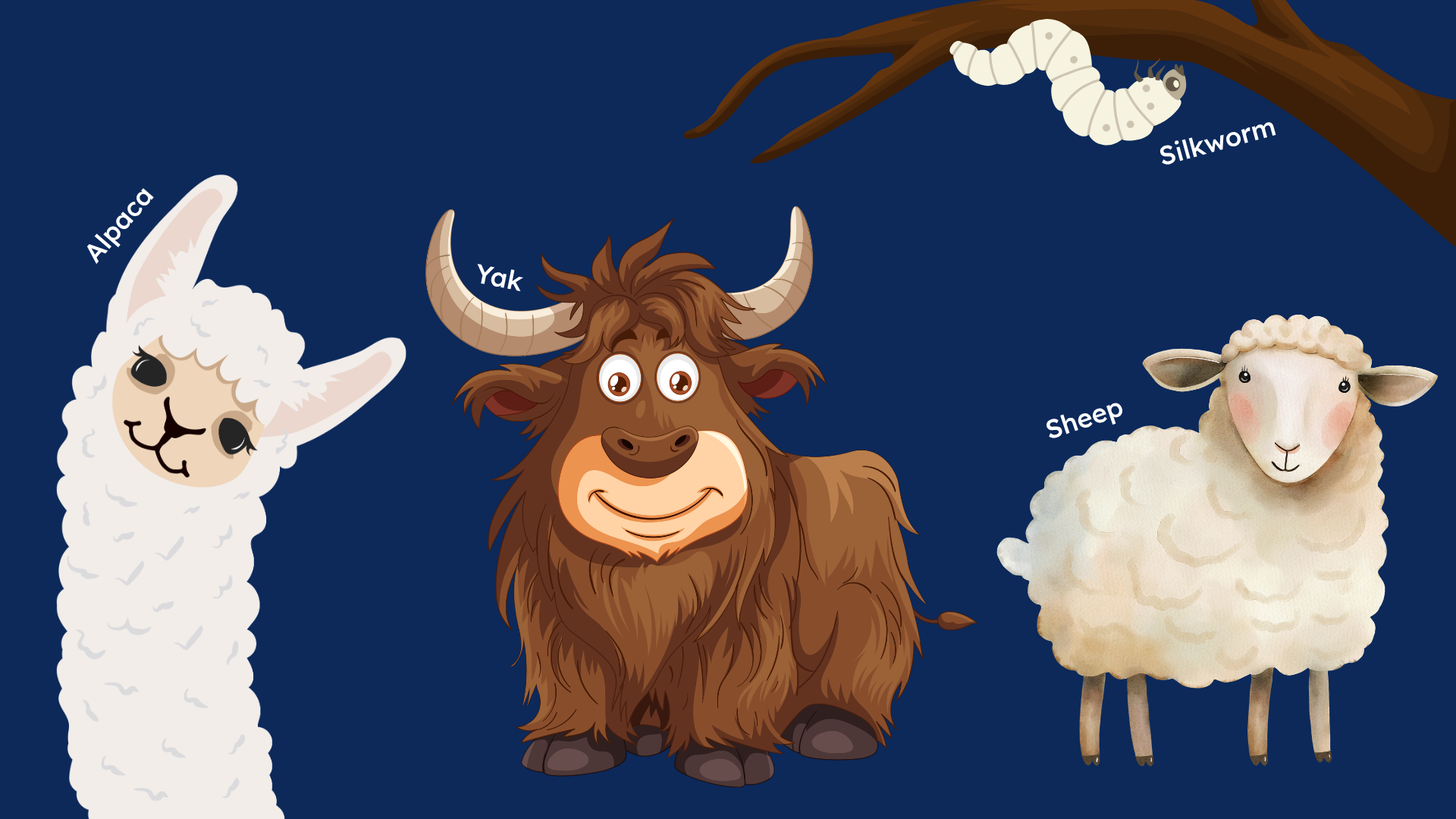
- Wool is obtained from many different breeds of sheep. It is warm and absorbent and holds its shape well. It can have a tendency to felt so care is taken with washing and drying. Follow the care instructions on the label.
- Alpaca, Mohair, and Cashmere come from different breeds of goats. The goats lack lanolin so their fur is hypoallergenic. They are soft, warm, and less likely to felt. Cashmere can be quite expensive.
- Silk is from the cocoon of the silk worm. Highly absorbent, elastic, and durable.
- Angora comes from goats and rabbits. Angora goats produce Mohair while Angora rabbits produce Angora Wool. Both are smooth, soft, and durable.
- Camel Hair and Yak Hair from the respective coats of these animals. Both are highly durable, warm, and soft, with a texture comparable to Cashmere.
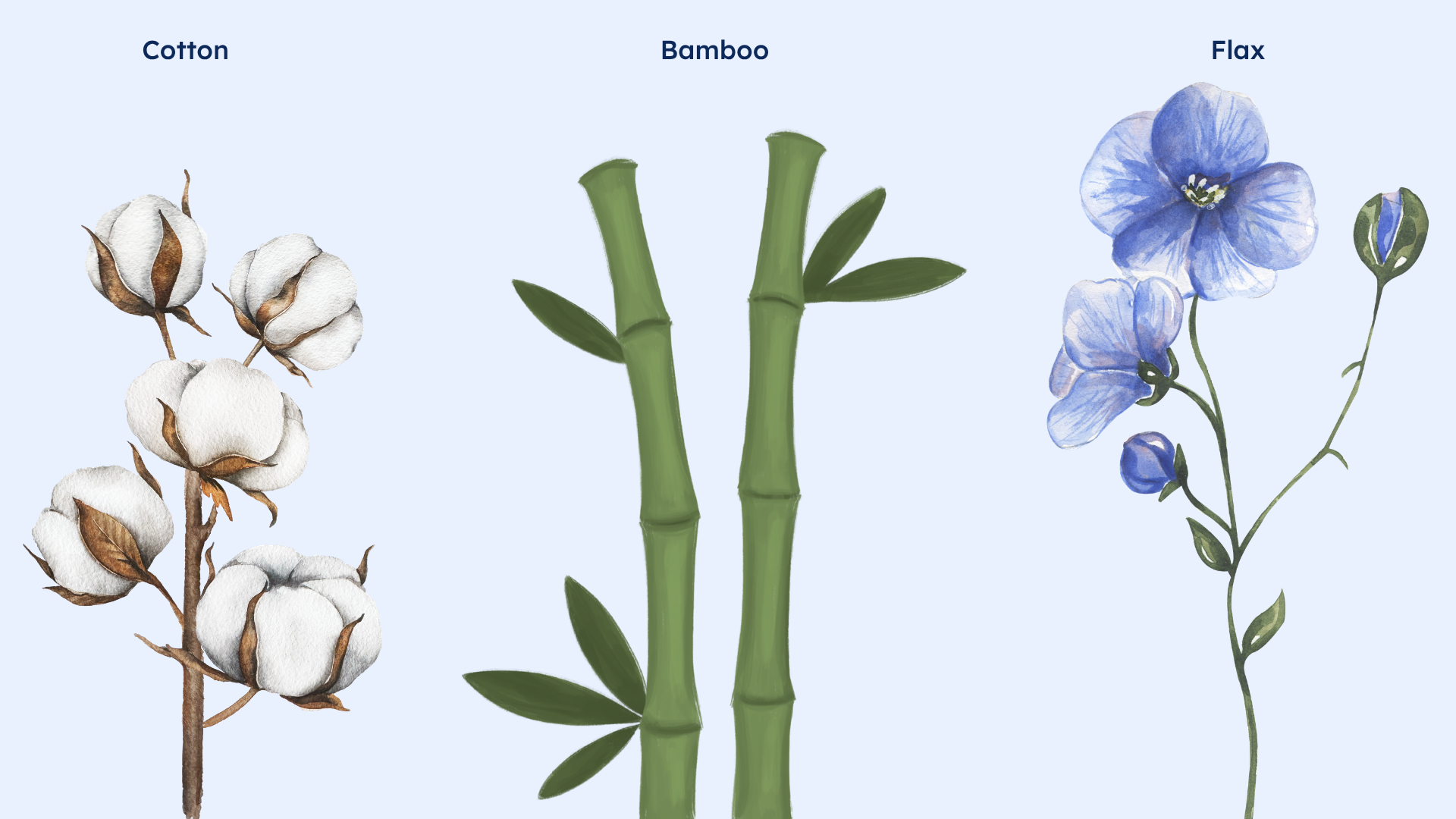
Plant fiber is less elastic than animal fiber and retains less heat. It is breathable and practical for either summer garments, accessories, or home decor. Plant fibers are highly sustainable, especially bamboo which grows quickly.
- Cotton comes from the seeds of its plant. It is soft, absorbent, breathable, and durable. It has great definition when crocheted. Mercerized cotton has a soft, shiny appearance and lovely definition.
- Bamboo comes from the wood pulp or grass of the plant. It is made into a type of rayon that has a lovely sheen, drapes beautifully, and has a soft, silky feel.
- Flax (used for Linen), Hemp, Ramie, and Jute are all stem-based fibers. All of these are durable and moisture wicking. Their key advantages include becoming softer with use and wear and their resistance to microbes and UV rays.
Synthetic Fibers
These are formed by extruding long fibers called polymers from fossil fuels like crude oil and coal. They are spun into yarn. They do offer superior strength, durability, and low cost which makes them attractive to many crocheters. They are not sustainable or bio–degradable. Some yarn companies are beginning to use recycled plastics to create these yarns.
- Acrylic, Polyester, and Nylon are the basic synthetic yarns. They are sometimes blended with natural fibers.
- Rayon is a semi-synthetic fiber made from wood pulp. Harsh chemicals are used in this process, making it less desirable than all natural plant fibers.
Understanding How Fiber Affects Your Design
Drape: How Your Fabric Feels and Moves
This is one of the most important factors you should consider. How your project looks and feels will affect how much you use or wear it. Several factors will affect the drape.
- Yarn Weight: lighter yarns like Lace and Fingering allow more movement and create a better drape than thicker yarns like Worsted and Bulky.
- Yarn Type: the content of your yarn will definitely affect the flow or drape of the fabric.
- Wool is more elastic and holds or regains its shape well, but does not necessarily drape well.
- Alpaca, silk, and bamboo drape beautifully. They are heavier than wool and less elastic.
- Cotton tends to be stiffer and has poor drape. Mercerized cotton drapes a little better if the yarn weight is small such as Lace, Super fine, or Fine weight.
Need To Substitute?
If you don’t have the yarn that is called for in a pattern, what can you do? Here are some tips for substituting yarn.
- Gauge should be matched. This is a hard and fast rule. Find the gauge on the label of a ball of yarn. Match that with the gauge called for in the pattern. You can change your hook size to try and match gauge with a different yarn. Just be careful not to go too far away from the size called for or you may end up with something way too loose or too tight in weave.
- Fiber should be carefully considered. The weight of the fiber is a bit more important than the content. The weight affects weave, flow, and drape. The fiber content can also affect these things but to a lesser degree.
Example: Your pattern calls for DK weight wool and you only have DK weight acrylic. This should work fine. But if your pattern calls for DK weight wool and you only have Worsted weight wool or acrylic, you might consider using something else as the difference in yarn size (weight) will affect the size of the finished piece.
Fiber content also affects how the fabric will look and feel. Remember that wool and acrylic can be quite soft while cotton is more stiff.
Need To Experiment?
Making swatches of different yarns in different sizes can give you a good idea how all these fiber sizes and types will behave. At Design Crochet we have a wonderful Stitch Dictionary full of stitches from elemental to complex stitch patterns that you can use. This is a fantastic resource for your experiments with yarn. You will find all the instructions you need to create your sample swatches and if you label and save them, they will save you time in the future.
Need Help Estimating Yarn Amounts?
Figuring out how much yarn a project will take just got simpler! The Yarn Estimation Tool at Design Crochet is there to help you solve this problem. Once you make your swatches you can use the tool to figure total yardage needed for any project. Just follow the easy prompts. Access the tool on the Welcome page of our site.
Need Some Advice on Substitution?
Yarnsub.com is a fantastic resource for substitutions. Type in the yarn you want to substitute for and many choices and suggestions appear. It is a terrifically easy site to use. Bookmark it for future queries.
Local yarn shops are a great place to learn more about yarn. Ask for their help, advice, and suggestions. They often have swatches for you to look at and may even have experience with the yarn you are trying to find a substitution for.
In a future blog we will explore Diving Into Your Yarn Stash and how to identify the weight and type of all that yarn you may be hanging onto that was leftover or donated to you. There is a use for all of it and we will get our creative juices flowing just figuring that out. Once you identify the weight and type of yarn you have it will be easier to decide on a project to make with it.
Have a project in mind already? Let us help you find the right fiber for any project. Head over to Design Crochet and send us a message, or find us on our social media pages!