From Mathematics to Crochet: Why I Built Design Crochet

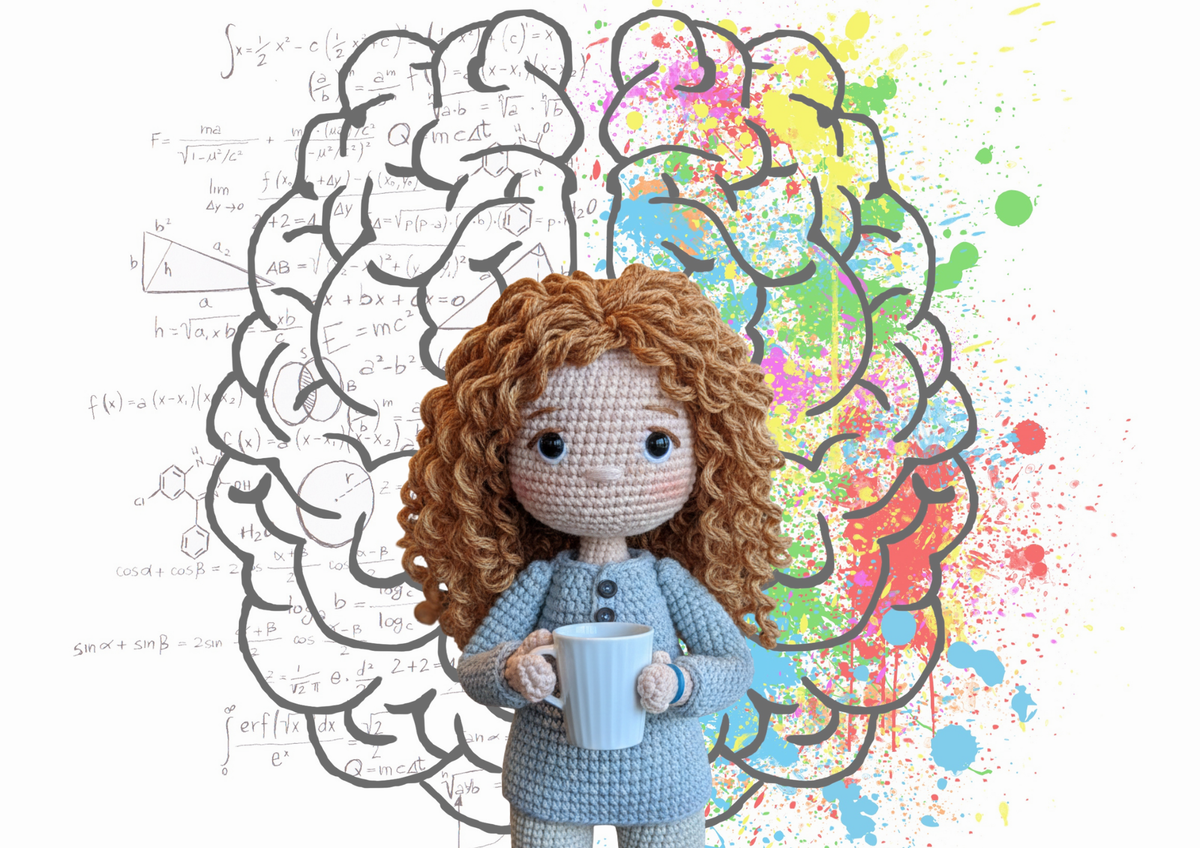
I spent years studying the same branch of mathematics that John Nash helped make famous. I’ve watched A Beautiful Mind the way some people watch a mirror - not because my life maps onto his, but because the shape of the story is familiar: the mental gymnastics, the isolation, the sense that the work asks something of you that most people around you don’t quite understand.
The movie gets some things right. Hard problems are isolating. The balance between intense focus and mental health is real. Nash lived with schizophrenia, and I won’t pretend to know how that did or didn’t shape his capacity for visionary work. That’s his story, not mine to claim.
What the movie doesn’t show - and what I wish it did - is the self-discipline.
The part nobody films
There is a beauty in choosing to stay with a problem when its complexity doesn’t matter to most people, when the only reward for years of work might be a few pages that a handful of specialists ever read. You give up other opportunities. You narrow your life. Not as martyrdom, as devotion to the act of solving.

When it lands, society values the output deeply. A proof. A framework. A way of seeing that wasn’t there before. But the years before that landing are quiet.
Mathematicians learn to live in that quiet. I did. I still do, in habits I didn’t fully choose: I self-select a small inner circle. The depth in those relationships is real. The breadth is weak. When a problem needs focus, I shut the rest of the world out. And when the intensity gets too much, I make a point of coming back to the surface.
That last part sounds healthier than it always is.
When the surface breaks
About a year before I finished my PhD, I was in a bad car accident and suffered a traumatic brain injury. My last year of grad school was the start of a very dark period.
I’m the kind of person who walks away from pain like nothing happened. That’s exactly what I did then. In hindsight, the TBI deepened my tendency to isolate. I had a hard time regulating my emotions. Impulses were nearly impossible to control. The same mind that could sit with an abstract problem for months was, in other ways, not mine to command.
I got through. I finished. I built a life of stability over the years that followed. But the pattern to go deep, shut the door, solve alone didn’t disappear. It just learned new contexts.

The problem that brought me back to grad school
Nearly a decade later, I started Design Crochet.
The early development went fine. Then I hit working in the round.
I’m not going to walk you through the topology of circles. I’ll just say this: representing crochet in the round - correctly, consistently, in a way that holds up as the art evolves - may be the hardest mathematical problem I’ve ever worked on. And something about that intensity reminded me of the dark place I’d once let myself fall into.
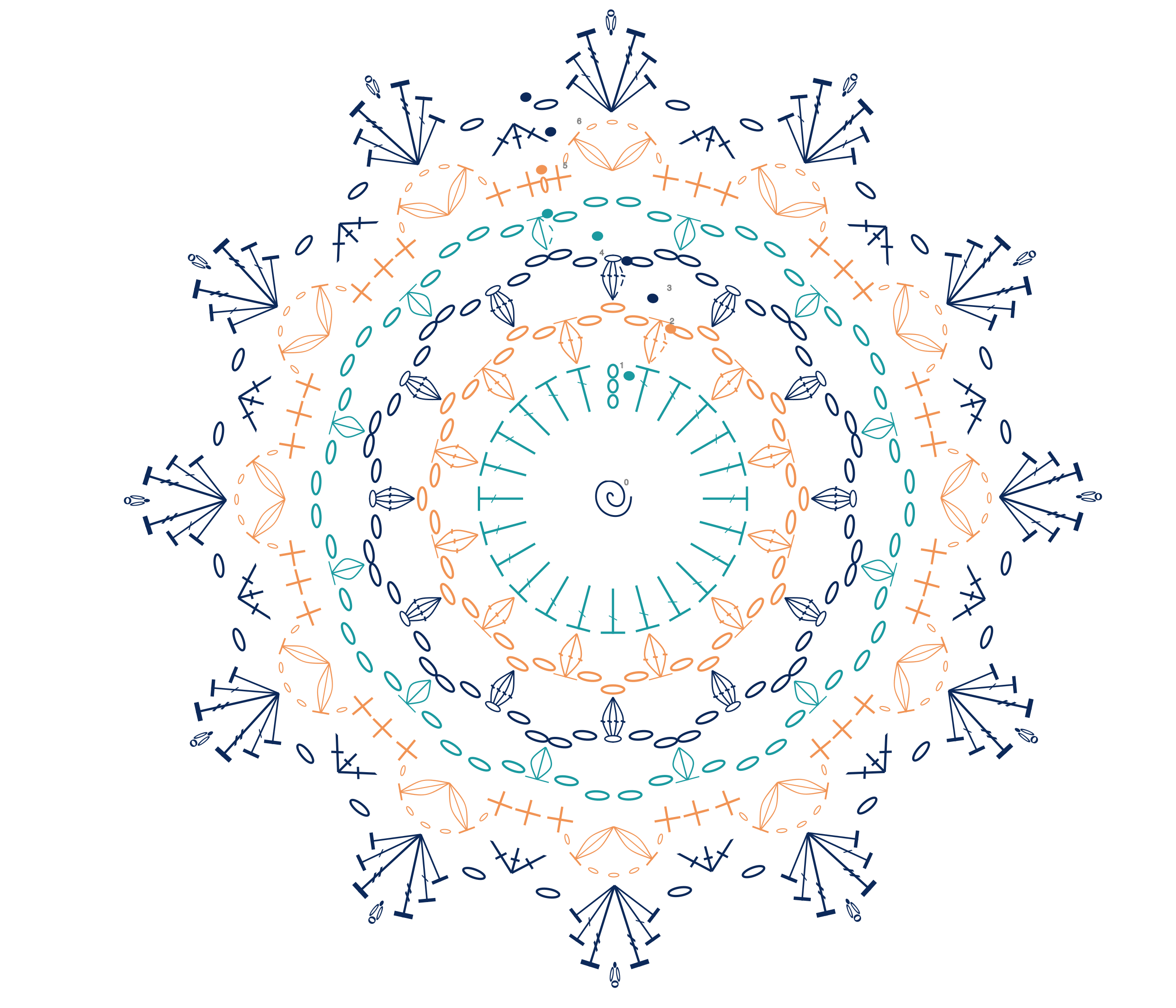
So I made a different choice.
I built that piece in the open. Bugs visible. Limitations visible. Other people watching. That’s normal in software, but for me it was also deliberate: a way of not disappearing into the problem the way I had in grad school.
Design Crochet isn’t a proof I’m writing in an attic. It’s a community effort: we are building this together. I need outside support to keep going and I need to step back when the problem-solving starts to feel too much like that last year of my PhD.
What mathematical training actually gave me
The transfer isn’t “I think in systems” or “I like structure.” Plenty of people like structure.
What math gave me is comfort with ambiguity: the long stretch before anything resolves.
There is no right answer for how to run a business. Or how to define the problem. Or what counts as a “product.” In software, product is fluid: features come and go as the world changes. My instincts there don’t always match people who expect a fixed deliverable and a finished box.
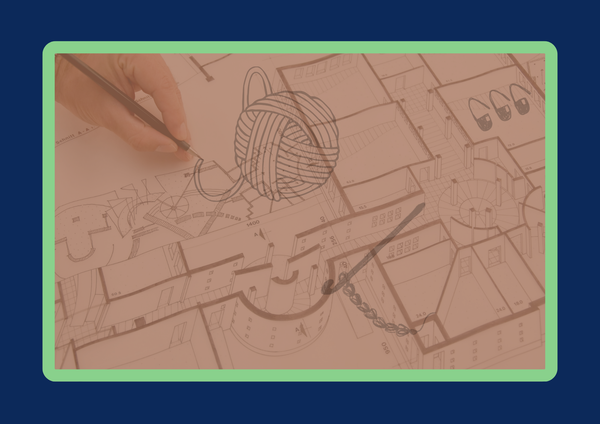
Design Crochet is a never-ending problem in the best and worst sense. There is no perfect way to represent crochet as architectural images, because the art keeps evolving: new techniques, new conventions, new arguments about what a stitch name means. Keeping the tool useful means staying in tune with a moving target. Math prepared me for that part. I can sit in the not-yet-solved without panicking.
What math didn’t prepare me for
Sales. And the fiber arts industry.
I came up in startup culture. Creators and yarn shops think on a different scale. They define a “customer journey” differently. I’ve sat in conversations with shop owners where I talked about experimentation and retention - the things that can make or break a business in my previous world, and felt completely misunderstood. I could talk until I was blue in the face. It didn’t land.
I’m still learning how to communicate in a way that’s true to my strengths while making the depth I bring legible to people who didn’t ask for a lecture on infrastructure. That’s not a math problem. There’s no proof that convinces a skein of yarn to trust you.
A builder is going to build
The honest truth about “coming back to the surface” is that I’m a builder with big dreams.
When I step away from a problem that’s eating me alive, I often pivot to something I think has wider reach: something that spreads the word about Design Crochet. Which sounds healthy until you notice I’ve picked up more projects and spread myself thinner. As a solo founder, I was already thin.
So now I treat that impulse as a signal: I pause, I ship a small contained thing, and I come back to the hard problem with outside eyes.
One thing that does ground me is teaching out loud: educational videos about how I think about crochet, and the terminology I’m developing to make the art more accessible. I’m not trying to replace everyone else’s definitions. I’m arguing that a more consistent, shared language makes it easier for newer crocheters to enter the craft, and that the people who already speak the dialect deserve better infrastructure - not a takeover.
That’s the same instinct that sent me into mathematics. Care deeply. Stay with the hard thing. Try to make the structure visible.
The difference now is that I’m trying to do it where people can see me and where I can’t afford to confuse depth with disappearing.
Why I’m telling you this
If you’re reading this as a potential partner, collaborator, or backer: I’m not the movie version of a mathematician. I’m a founder who knows how to go deep, who has paid for that gift, and who is deliberately building in public so the work doesn’t consume the person doing it.
I bring rigor, patience with unfinished problems, and a long view on what “product” can mean in a craft that’s never had shared infrastructure.
I’m not here to preach startup vocabulary to yarn shops. I’m here to translate and build what actually fits.
If you’re looking for someone who will stay with a hard problem - not perform solving it - and build the bridge between design, materials, and makers, I’d love to talk.
Try the interactive pattern library · Get in touch about partnerships