What the craft industry and tech get wrong about each other


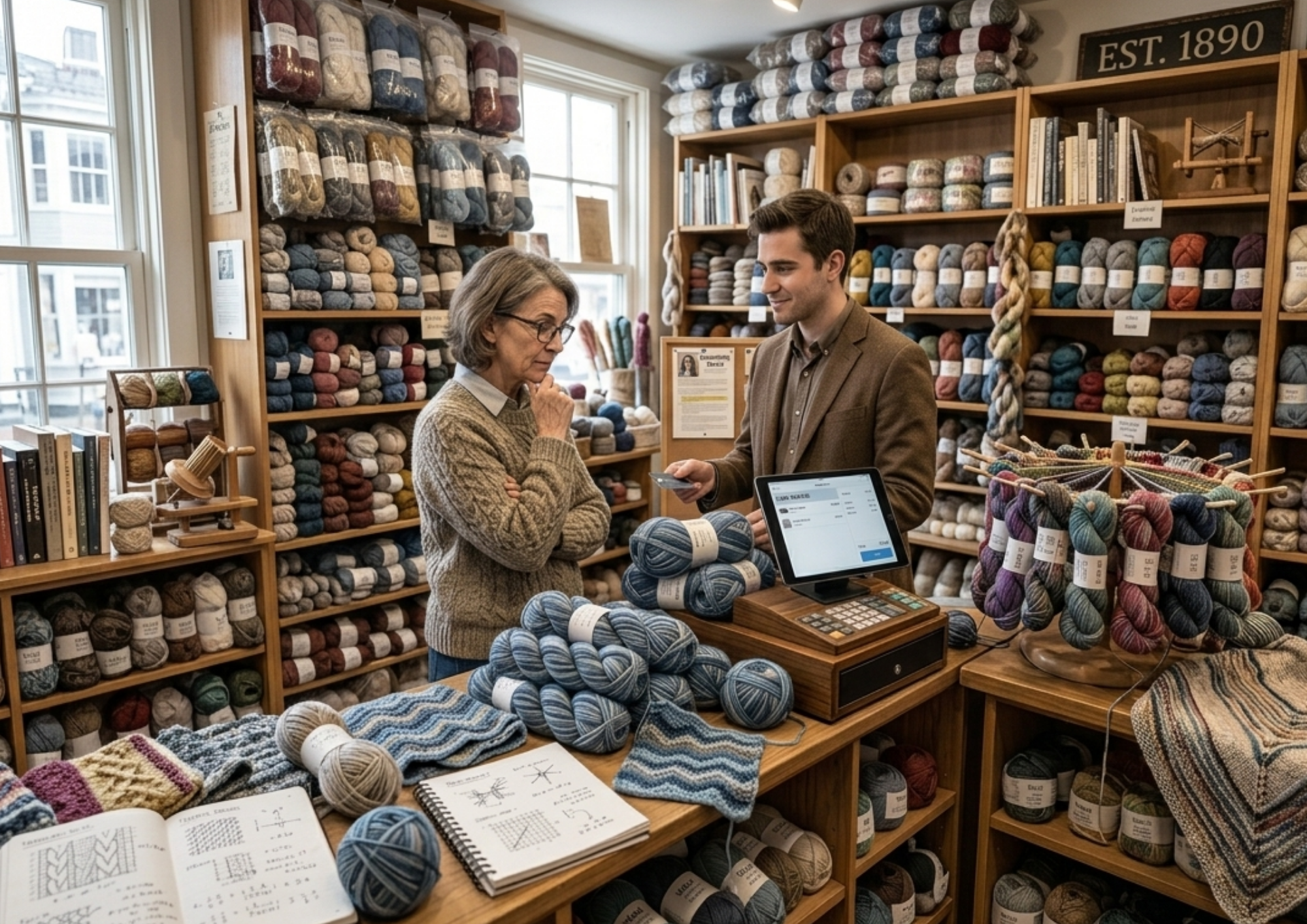
I walked into a yarn shop excited about a demo.
I’d white-labeled one of my products so their branding could shine - not mine. It was rough on purpose. In tech, that’s normal: build something small, pitch the idea, collect feedback, iterate. I thought I was solving an important problem.
The shop owner’s face told a different story. Cognitive overload. Resistance, not curiosity.
I left confused. In my mind, I’d handed them a gift. In theirs, I’d handed them work.
Another thing to manage
What I learned later: they heard another task.
Technology to maintain. Online content with their label on it. A shop that sells mostly brick and mortar, not a tech company pretending to be one. I’d framed it as extending their community. They heard unnecessary overhead.
That’s the first lesson tech people forget: in fiber, relationship is the product. A demo that assumes appetite for new tooling can feel like a tax on attention that’s already spoken for: classes, samples, regulars, inventory, the person who needs help picking a yarn for their first scarf.
Tech optimizes for iteration. Fiber optimizes for trust already earned. Pitch the wrong frame and you’re not innovative - you’re exhausting.
What fiber does better: retention through people
In software, retention is king. You design habits: notifications, loops, features that bring people back without thinking.

Fiber has something tech keeps trying to replicate badly: designers as the retention layer.
Makers don’t just buy patterns. They buy a designer: consistency, voice, knowing what to expect. Find someone whose patterns click and you stay. Community forms at the level of following, not funnel metrics.
That’s beautiful. It’s also where the industry frays.
Patterns rarely travel with materials unless a designer is embedded in a shop and embedding doesn’t scale across stores. Many shops can’t afford that presence at all. Distributors publish patterns to move yarn. The best discovery tool in the building is often a sample on the shelf. Everyone wants pretty designs and samples; the design market saturates; designers repeat the same stitch tutorials just to be seen.
The customer buys yarn in one place and finds the project somewhere else. To stay, they have to already be the kind of person who will research on their own. Fiber retention works (when it works) for people who were going to be obsessive anyway.
The gap isn’t talent. It’s connected dots.
What tech does better: language and timing
Shared standards aren’t the enemy of creativity
In tech, there’s an idea called domain-driven design: get ruthlessly clear about the language of the problem so everyone’s talking about the same thing. It sounds corporate until you’ve watched fiber without it.

Designers invent terms when they can’t find a reference. Special stitches live inside single patterns. The same word means different constructions. Nobody’s wrong on purpose, it’s fragmentation dressed as freedom.
Fiber often treats uniformity as limiting creativity. I understand why. I’ve also seen the opposite.
At my last job, I built analytics reports that proved ROI for customers - our sales team depended on them. We shipped a playbook: fixed chart types, specs for each, consistency across every analyst. It felt constraining until it didn’t. Familiar structure meant I could innovate on what the chart showed without re-teaching how to read it every time.
The win: I presented a new chart with proper labels. A sales rep explained the data back to me - correctly - without my narration. Shared language bought room for new ideas.
That’s what I want for crochet notation: not to replace every designer’s dialect, but to make the art easier to enter without making experts start over.
The right moment is at the register
Tech obsesses over when to show up. Fiber’s most important moment may be simpler than we admit: when someone buys materials for their first project. That purchase sets the journey: whether they finish, whether they come back, whether the shop becomes their place.
Right now those moments are split. Materials here. Pattern there. Tutorial somewhere else. Retention then depends on a customer willing to do the integration themselves.
Tech’s honest gift to fiber isn’t an app for its own sake. It’s connection at the point of sale: yarn, pattern, sample, support in one breath.
What tech should stop importing
White-label demos without respect for operational load. I learned that in person.
AI-generated patterns flooding Etsy and Ravelry. That’s not modernization, it’s credibility erosion. A file format that treats a pattern as interchangeable text makes slop cheap. Makers get manipulated; designers get undercut; the art looks disposable. This loops back to why PDF-as-default is a deeper problem than layout: when the artifact is easy to copy and generate, trust leaves the building.
Fiber doesn’t need more content. It needs fewer lies about where content came from.
Translator, not colonizer
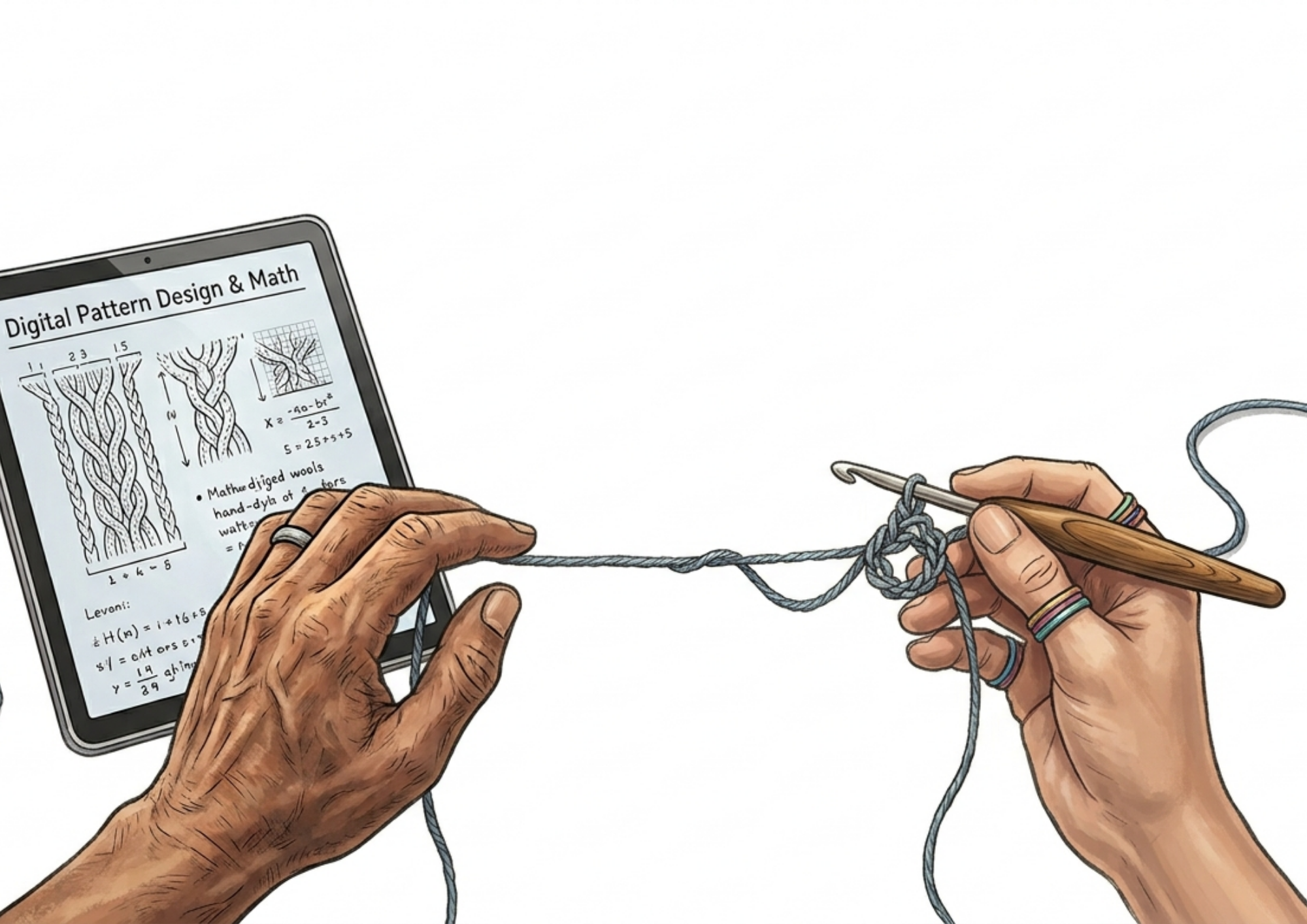
I’m building Design Crochet from both sides of this gap: not because tech is smarter, but because I’ve watched each industry fail the other.
Fiber teaches patience, material truth, and loyalty that no growth hack replicates. Tech teaches infrastructure, shared language, and showing up at the moment of decision.
The shops I want to work with don’t need another platform to manage. They need less friction between what they already do well - samples, service, community - and what their customers need when they walk out with yarn and hope.
If you’re a shop owner, designer, or dyer who’s ever felt talked at by someone with a startup vocabulary: I’m learning your language. Slowly. Honestly.
If you’re from tech and you think fiber is “behind”: you’re measuring the wrong things.
Yarn stores: Want to feature your shop on our patterns colorway tool? See it in action and message us here.