Why crochet education often feels fragmented
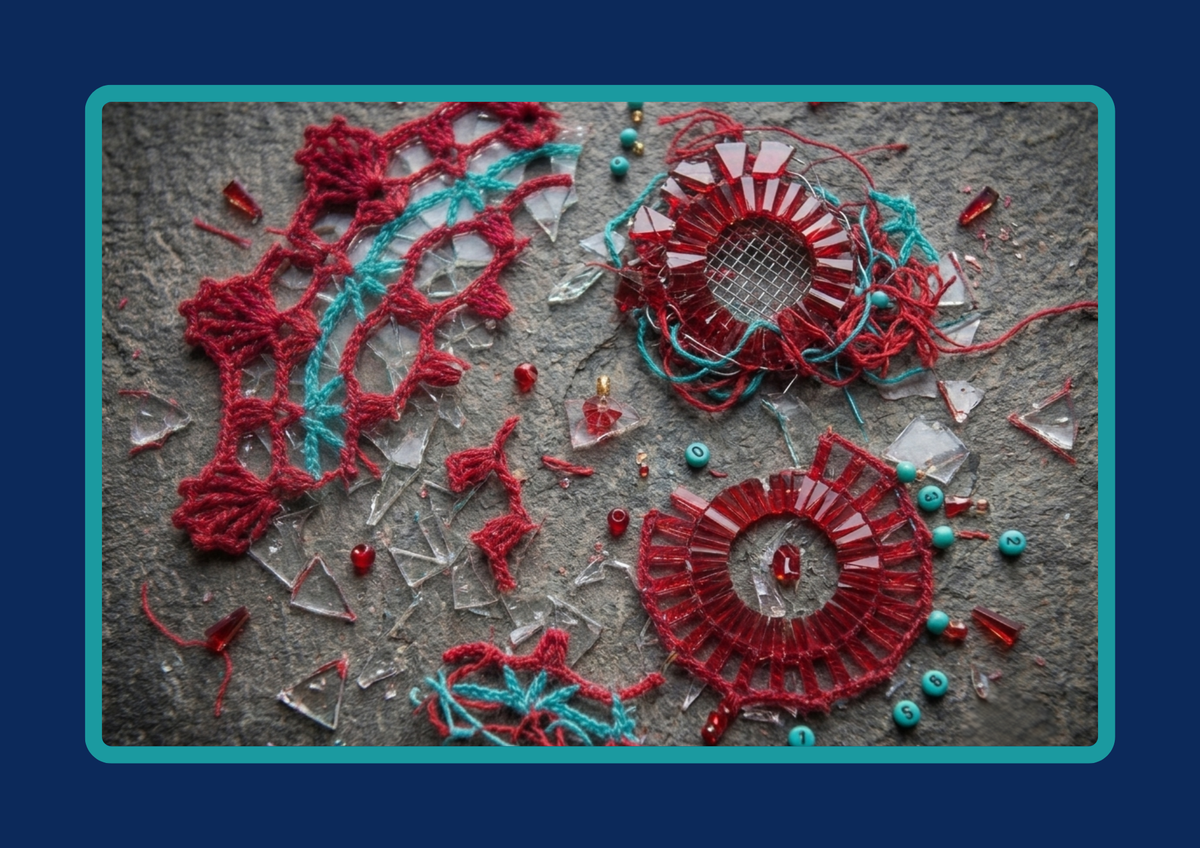
I learned crochet the way a lot of self-taught makers do: in pieces.
Stitches from one blog. A free pattern from one designer. My first paid download from another. Yarn from the shop down the street, or whatever was in stock online, with the pattern’s yarn list treated more like a suggestion than a rule.
None of that is wrong. It’s how the hobby actually spreads. But nobody tells you, at the start, that you’re assembling an education from fragments—and that the fragments don’t always agree.
If the last post was about the medium (PDFs that fight you on a phone), this one is about the map. Most self-taught makers are handed pieces of map from a dozen drawers. No wonder the journey feels harder than it should.
The self-taught path is a scavenger hunt, not a curriculum
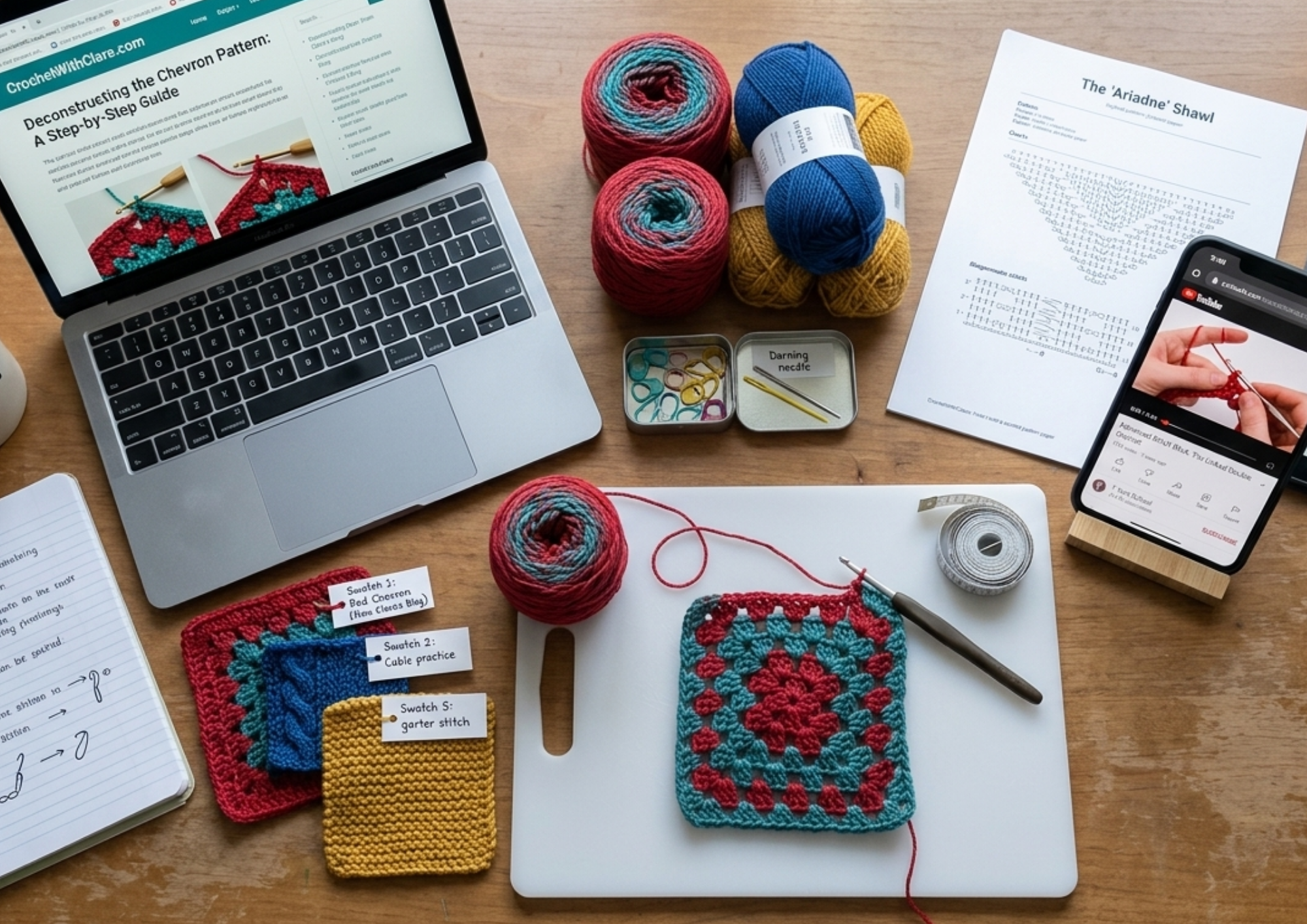
I picked up basics from the Dora Does blog. When I felt brave enough, I tried free patterns, then bought my first pattern on Etsy. Along the way I learned that “recommended yarn” is often a guideline, not a command.
I rarely follow yarn recommendations exactly. Trial and error taught me more than any ball band: just because you can use a yarn for a project doesn’t mean you should. Not all “same weight” yarns behave the same: fiber content, ply, and subtle thickness changes all shift how the finished piece looks and feels.
That’s valuable learning. It’s also extra work you’re doing because no one connected yarn choice, stitch mechanics, and pattern language into one clear path. Materials live in one place. The pattern lives in another. The stitches were learned somewhere else again. And if you want to grow, you’re often told to keep exploring new designers, new techniques, new styles until the hobby starts to feel like overload instead of escape.
Three cracks that aren’t “you’re bad at crochet”
1. Patterns are lists, not ladders
Many patterns read like instructions only: do this row, then this row, then this row. If you want to go deeper, the path is often “see my other patterns”—not “here’s how this technique works” or “here’s what to learn next.”
That’s fine for makers who already speak the language. For self-taught crocheters, it’s easy to stall on the same kind of confusion over and over, with no built-in way to level up inside the pattern itself.
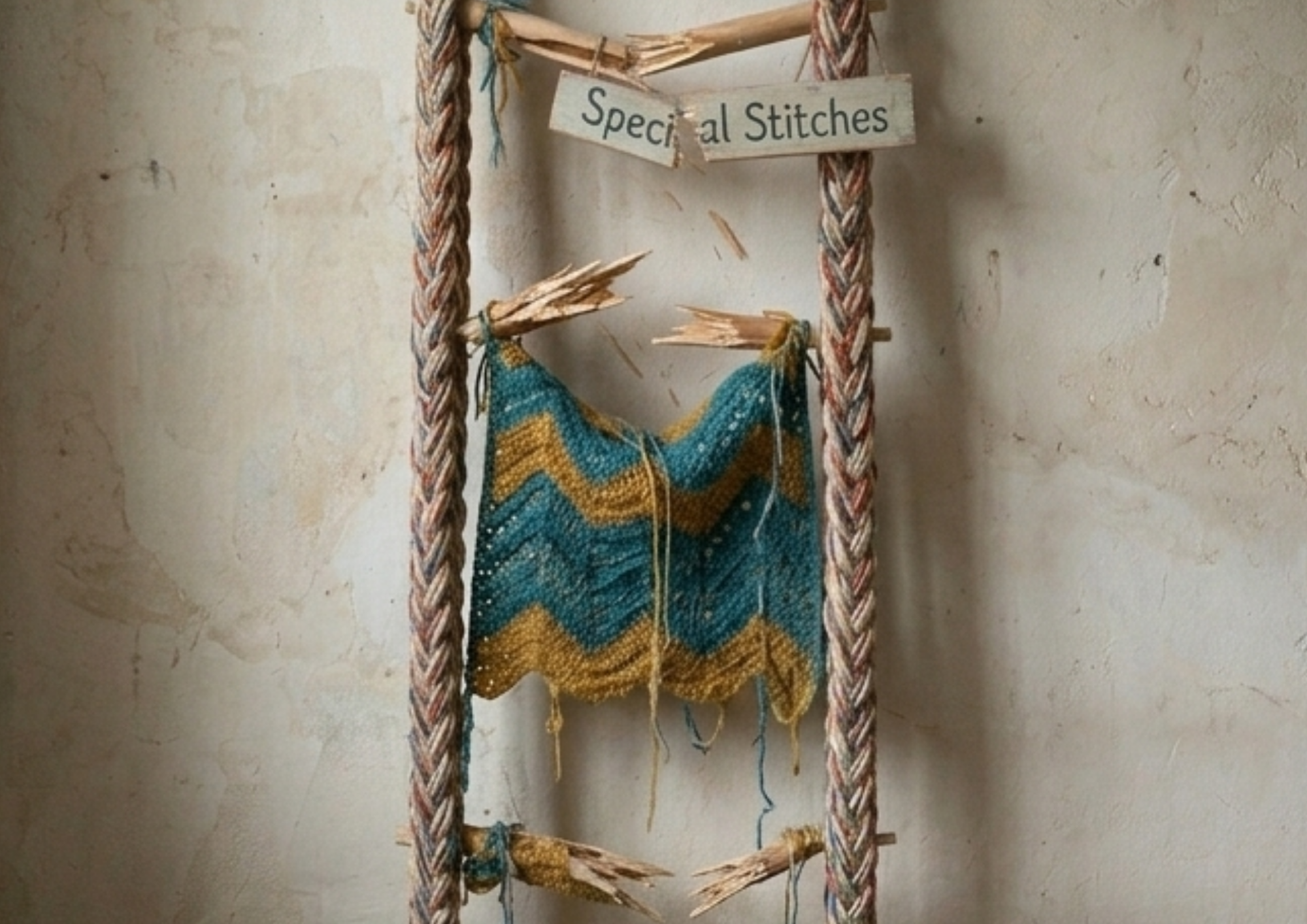
2. Stitch language is roulette - especially “special stitches”
Special stitches are where I still trip up most. Anything that depends on joined tops or joined bases is often defined only inside that pattern. And the same word can mean different things somewhere else.
For example, A shell might be five double crochets in one pattern, trebles with a different count in another, or the same stitches with chains between them in a third. Bullion is another example: the name travels, but the construction doesn’t always match what you saw last time.
So you’re not just crocheting, you’re constantly flipping back through the pattern to remind yourself what this designer meant this time. That’s exhausting, and it has nothing to do with whether you’re “talented enough.”
3. Pattern writing itself isn’t standardized
Even when you find a designer you love, how patterns are written can still shift from project to project. I’m a supporter of Kate of ItWasYarn because I enjoy her techniques and I know, broadly, what to expect when I buy from her. I still notice that work terminology can change depending on the pattern. The relief isn’t perfection, it’s consistency of trust: I’m not starting from zero with every purchase.
When every designer is effectively building their own dialect, makers pay the cost in confusion, frogging, and abandoned projects.
What makers do when nothing connects
When I got stuck early on, I’d pull myself out of the pattern and hunt a YouTube tutorial for the stitch. Sometimes it helped. Often it didn’t because the language still didn’t line up. I’d go from casually following a pattern to research mode: find a technique, compare definitions, try to climb back in.
The hidden cost wasn’t just time. I lost enjoyment. Crochet stopped feeling like flow and started feeling like homework.
Other coping strategies work too: accept that early pieces will be messy and power through. Stick with one trusted designer. Get selective about who you follow. All of that is rational. It’s also a sign the ecosystem asks makers to route around fragmentation instead of fixing it.
Some makers eventually try to build the missing connective tissue themselves by documenting terms, chasing consistency, even building tools because the gap is that obvious. I ended up on that path. It’s not the job of every crocheter, but it explains why “just follow the pattern” so often isn’t enough.
It's not a conspiracy against beginners
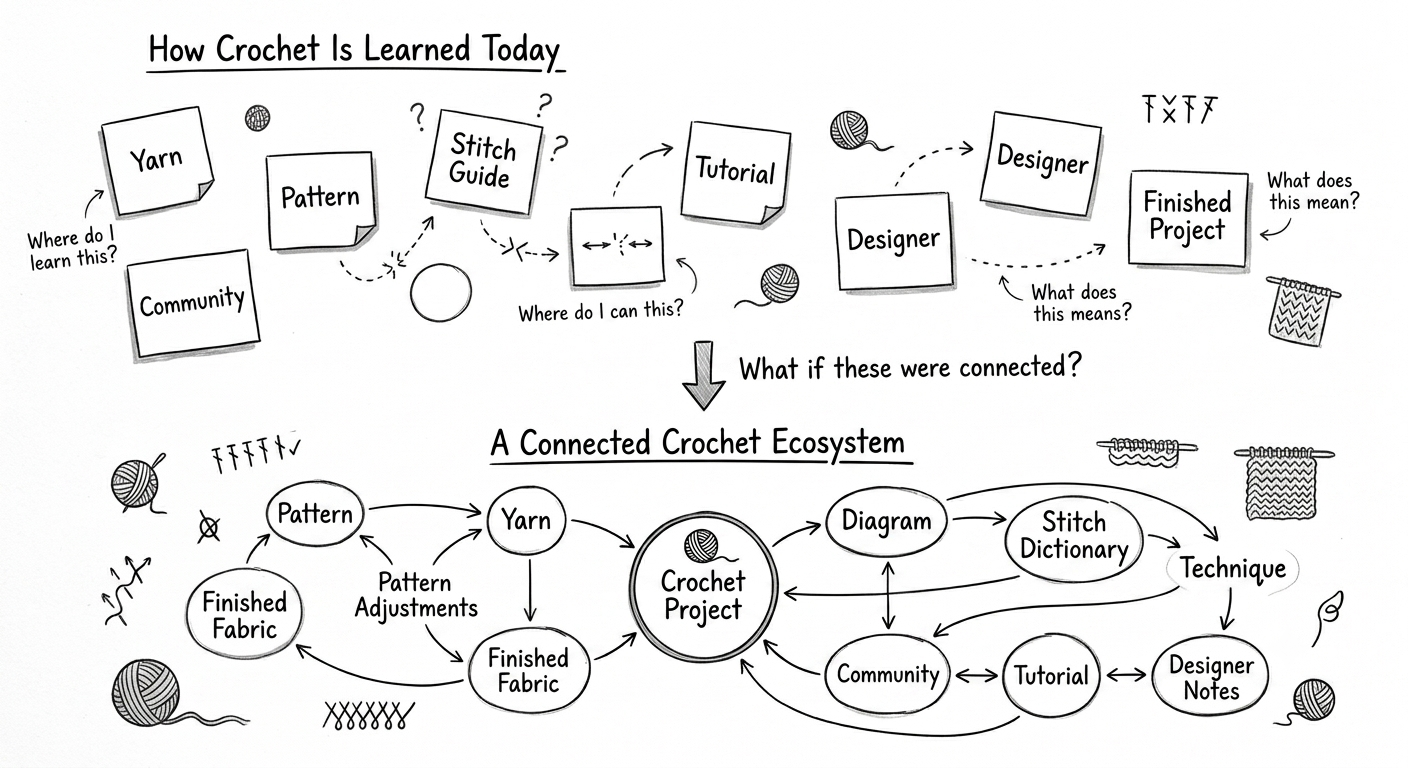
I don’t think indie designers are the villain here. They’re using the best tools available: PDFs, platforms, and their own terminology often without a shared industry standard behind them.
The DIY wave accelerated (especially during the pandemic) faster than shared infrastructure could catch up. In a messy market, there’s room for new voices and new ideas but organization and consistency make it easier for makers, not harder.
PDFs, as I argued last time, fragment discovery: they’re built to be shared, not to teach or to keep stitch help in the same place as the row you’re on. When education is scattered and the default format fights focus, self-taught makers feel it twice.
What I wish had been there from the start
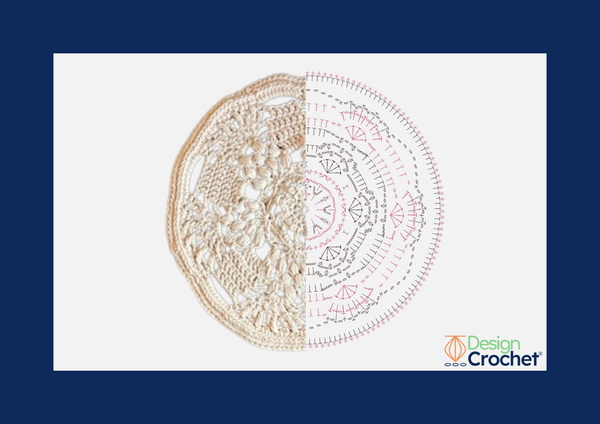
If I could add one thing to most patterns—besides an honest special-stitches section—it would be row-by-row charts that make the fabric easy to follow visually, alongside the words.
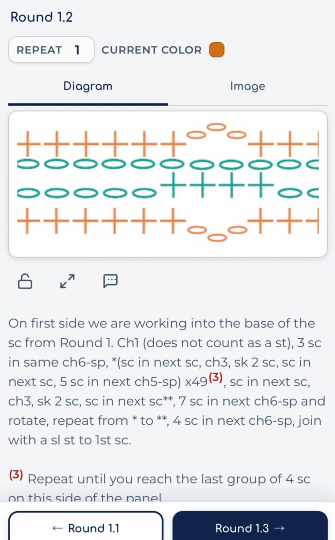
Charts don’t solve everything. But they’re a step toward structure you can see, not just rows you memorize. The deeper fix is the same principle I care about in product work: the right information at the right time. Pattern distribution should focus on stitch help, definitions, and visuals tied to the row you’re actually making, not scattered across tabs and downloads.
That’s the bridge to the next question in this series: why following a pattern isn’t the same as understanding it.
Memorizing “row 47 says sc, dc, shell” isn’t the same as knowing what the fabric is doing, why a special stitch is built that way, or how to recover when yarn substitution changes the drape. Next time, we’ll talk about that missing layer, and what changes when you stop treating patterns as scripts and start reading them as systems.